What to look for in kicking shields?
How to Choose a Kicking Shield: What to Look For Before You Buy
A kicking shield — sometimes called a multipurpose pad or kick pad — is one of the most useful pieces of training equipment you can own. Unlike a heavy bag, it’s held by a partner, which means you’re practicing against a moving target and getting real-time feedback on your technique and power. But not all kicking shields are built the same, and buying the wrong one for your training level or discipline will frustrate both you and your partner.
Here’s what actually matters when choosing one.
What is a kicking shield?
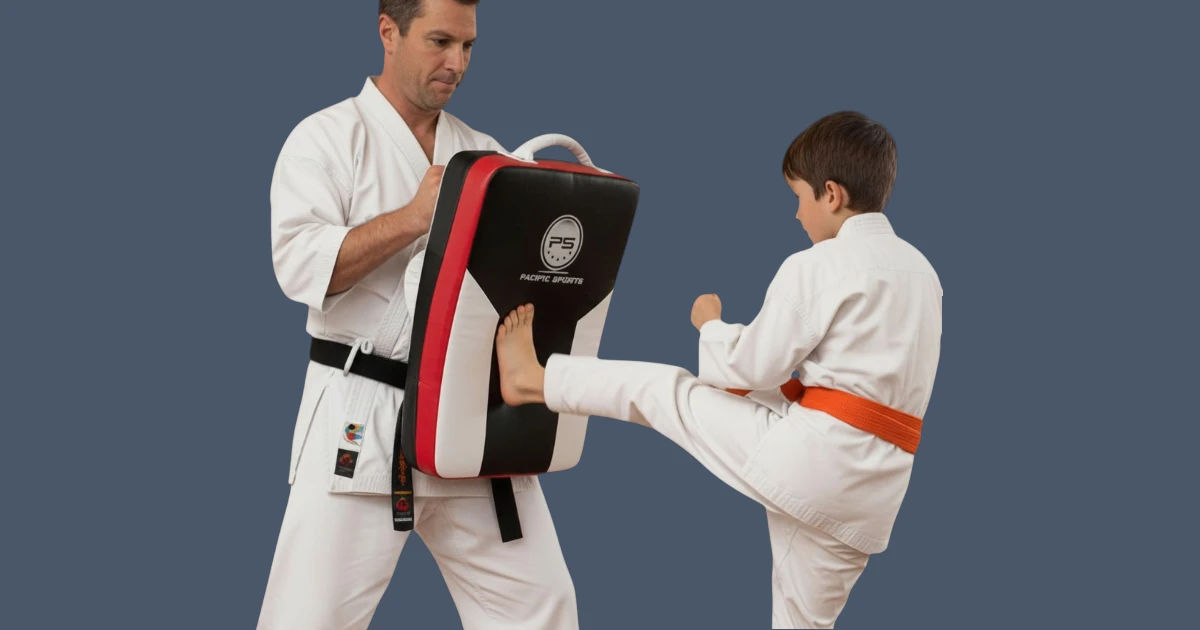
A kicking shield is a large rectangular or square padded target, held by a training partner. Unlike focus pads — which are worn on the hands and used primarily for punch and strike combinations — a kicking shield is designed to absorb the full force of powerful kicks, knee strikes, and elbow strikes. The holder uses handles on the back to grip it securely and can move around to create a dynamic target for the kicker.
The distinction matters because beginners sometimes confuse the two. Focus pads are for hand techniques and light kicking accuracy work. Kicking shields are for developing real power and practicing full-force strikes safely.
Thickness and padding
This is the most important factor — and it matters as much for your partner as it does for you. A shield that’s too thin transfers the force of your kicks straight through to the holder’s arm and body. Train with an inadequate shield regularly and your partner will end up with bruised forearms, which is a fast way to run out of willing training partners.
Look for a minimum of 11cm of padding thickness. Pacific Sports kicking shields use three layers of high-impact, high-density foam — this layered construction absorbs and distributes force far more effectively than a single layer of the same total thickness. A well-padded shield lets you kick with full power while your partner feels only a manageable push.
Size
The striking surface needs to be large enough to practice all types of kicks — front kicks, roundhouse kicks, side kicks, and spinning kicks — without your partner needing to reposition constantly or risking an off-target kick landing on their arm or body.
The recommended dimensions are 56cm high by 40cm wide. This gives you a large, clearly defined target that accommodates kicks at different heights and angles. Smaller shields are cheaper but they limit what you can practice and increase the risk of the holder getting accidentally struck.
Foam density: matching the shield to your level
This is where beginners and advanced practitioners need different things.
A lighter, medium-density shield suits beginners and younger students well. It’s easier for the holder to manage, absorbs moderate-force kicks comfortably, and is appropriate for technique-focused drilling where power isn’t the priority. It’s also more forgiving if a kick lands slightly off-target.
As your power develops, you need higher-density padding. A lighter shield under a powerful kick compresses too easily — the kicker doesn’t feel proper resistance, and the holder absorbs more force than they should. High-density foam gives you that solid resistance that lets you feel whether your kick actually had power behind it, and protects the holder appropriately.
If you’re a heavy hitter or an advanced practitioner, always consider your partner when choosing a shield. A shield that’s rated for professional use with an extra protective layer isn’t just better for your training — it’s essential for keeping your training partners safe.
Handles
The holder needs to maintain a secure grip throughout a drill — including when powerful or unexpected kicks land. Look for three handles on the back of the shield, which allow the holder to grip with both hands in multiple positions depending on how they’re holding the shield. A single riveted handle on the top provides additional grip for vertical holding positions.
The handles should be solidly attached — riveted rather than stitched where possible at the top handle, which takes the most direct force. Poorly attached handles are the most common failure point on lower-quality shields.
Straight or curved surface
Some kicking shields have a flat striking surface; others are gently curved. Both work equally well for kicking practice. The curved design is slightly more ergonomic for the holder — the shape fits more naturally against the body and forearm when held in close. If you’re buying for club use where multiple people will be holding the shield, curved tends to be more comfortable across different body types.
One thing to check before buying
Check whether the shield has any external zips. Some cheaper shields use zips to close the padding compartment, and those zips sit on the striking surface. A zip edge on a striking surface is a foot injury waiting to happen — particularly for barefoot training in Taekwondo or Karate. Quality shields use stitched seams and Velcro straps only. If you see a zip on the front face of a shield, walk away.
Weight
There’s a balance to strike here. The shield needs to be heavy enough to absorb impact without flying backwards, but light enough for the holder to move around comfortably during drills. Pacific Sports multipurpose pads weigh approximately 900g each — substantial enough to absorb full-power kicks, manageable enough for extended holding sessions without the holder fatiguing quickly.
Maintenance
Training equipment that isn’t cleaned becomes a hygiene problem quickly. Sweat, skin contact, and mat work all contribute to bacteria buildup on the striking surface. Choose a shield with a synthetic leather outer surface that can be wiped down with a damp cloth after every session. Avoid fabric-covered shields — they absorb sweat and are almost impossible to clean properly.
Specifications to look for
- Dimensions: 56cm x 40cm x 11cm minimum
- Padding: Three layers of high-density foam
- Outer material: Synthetic leather — easy to wipe clean
- Handles: Three on the back, one riveted handle on top
- Surface: Straight or curved — no external zips
- Weight: Approximately 900g — lightweight but impact-absorbing
- Suitable for: Kicks, punches, knee and elbow strikes
- Disciplines: Taekwondo, Karate, Kickboxing, Muay Thai, MMA
Frequently Asked Questions
What’s the difference between a kicking shield and focus pads?
Focus pads are worn on the hands and are primarily used for punch combinations and light kicking accuracy work. Kicking shields are large handheld pads designed to absorb full-power kicks, knee strikes, and elbow strikes. You need both for a complete striking training setup — they serve different purposes and aren’t interchangeable.
Can one person hold a kicking shield alone?
Yes. One holder using two hands on the back handles can manage the shield for most drills. The three back handles allow different grip positions depending on the angle the shield needs to be presented at. For high kicks, the top riveted handle gives the holder better control of the shield height.
Do I need a different shield for Taekwondo vs Muay Thai?
Not necessarily. A quality multipurpose kicking shield handles kicks, knee strikes, and elbow strikes across disciplines. The main consideration is foam density — Muay Thai training tends to involve more knee and elbow work at close range, which benefits from the highest-density padding available. For Taekwondo focused on spinning and jumping kicks, the large striking surface and secure handles are the priority.
How do I clean a kicking shield after training?
Wipe the striking surface and handles with a damp cloth after every session. For a more thorough clean, use a mild disinfectant spray and wipe dry. Don’t submerge the shield in water — the foam filling takes a long time to dry fully and can develop mould if left damp. Store in a ventilated area rather than sealed in a bag.
Can children use adult kicking shields?
A full-size adult shield at 56cm x 40cm is too large for younger children to hold comfortably. For kids’ training, a smaller, lighter shield with medium-density padding is more appropriate — both for holding and for the force levels involved. As students develop strength and power through their teens, moving to a full-size high-density shield makes sense.
How long should a quality kicking shield last?
A well-made shield used in regular club training should last several years. The outer synthetic leather is the first thing to show wear — look for surface cracking or delamination as a sign the shield needs replacing. The padding itself degrades more slowly but will eventually compress permanently and lose its shock-absorbing effectiveness. If kicks start feeling harder for the holder than they used to, the padding has likely reached the end of its useful life.
Refer to the kicking shield buying guide Australia to choose the right equipment.
Explore our kicking shield buying guide Australia for tips on the best types for your training.
When considering your options, our kicking shield buying guide Australia can be a helpful resource.
For more details, refer to our kicking shield buying guide Australia.
For comprehensive insights, check out our kicking shield buying guide Australia.
For the best advice, refer to our kicking shield buying guide Australia.