Gi Cuts Explained: Japanese, Kata, European, and Taekwondo
A gi — the jacket, pants, and belt worn in Karate, Taekwondo, Judo, BJJ, and Jiu-Jitsu — comes in several different cuts. The cut refers to how the fabric is shaped and proportioned, and while all cuts are fully functional for training, they differ in sleeve length, lapel length, pants length, and intended use. Understanding the differences helps you choose the right gi for your discipline and your dojo’s expectations.
The Japanese terms for the three parts are worth knowing: the jacket is the uwagi, the pants are the shitabaki (or zubon), and the belt is the obi. The cut affects the jacket and pants; the belt is the same regardless of cut.
The main gi cuts
Japanese cut
The traditional cut used in Japan. The jacket sleeves are shorter than the European cut, and the pants are also shorter in length. The lapels of the jacket are longer. The looser, shorter proportions reflect the original Japanese training garment the gi evolved from. Outside Japan this cut is less common — most dojos in Australia, Europe, and the Americas use the European cut as standard. If your school specifically requires a Japanese cut, it’s worth confirming before ordering as it’s not as widely stocked.
Kata cut
A specialised cut designed specifically for Karate kata competition. This is the most distinctive of all the cuts and the most rarely used outside its specific context.
The jacket sleeves are the shortest of all cuts — even shorter than the Japanese cut — and the fabric is heavy canvas, typically 16oz or 18oz. The gi is fully starched before wearing so that it remains stiff throughout the kata performance. That stiffness serves a practical purpose: the fabric snaps sharply and audibly with every technique, which is part of how kata judges assess the crispness and power of the movement. A well-executed technique in a properly starched kata gi produces a loud, clear crack — a soft or shapeless gi doesn’t give that feedback.
Kata cut gi are generally custom-made and not standard stock items. The adjustment process after putting one on is specific — the jacket needs to be set correctly so that it holds its shape during the performance. If you need a kata cut gi for competition, contact Pacific Sports directly.
European cut
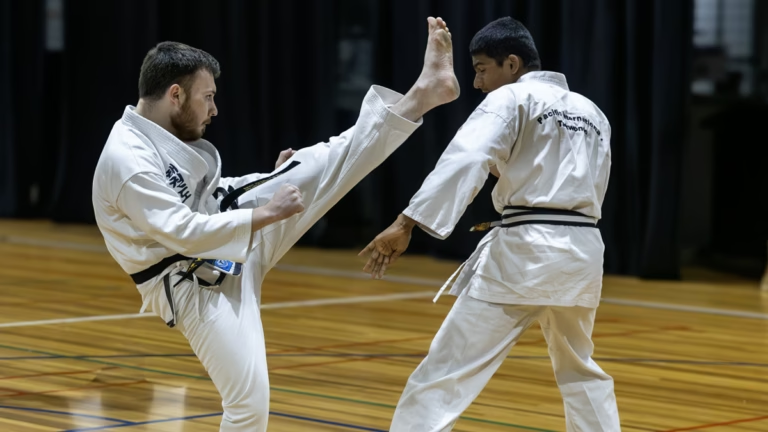
The standard cut used across Australia, Europe, and most of the world outside Japan. The jacket sleeves are longer than the Japanese cut, the pants are longer, and the lapels are shorter. This is the cut Pacific Sports stocks across all fabric weights and colours.
The European cut is generous through the shoulders and chest, which allows full range of motion for kicks, punches, throws, and groundwork without the jacket pulling tight. The reinforced stitching at the collar and sleeve edges resists the stress of being repeatedly grabbed for throws and takedowns.
If your school or instructor hasn’t specified a cut, European is the safe choice — it’s what most Australian dojos use and what most practitioners outside Japan train in.
Modern cut
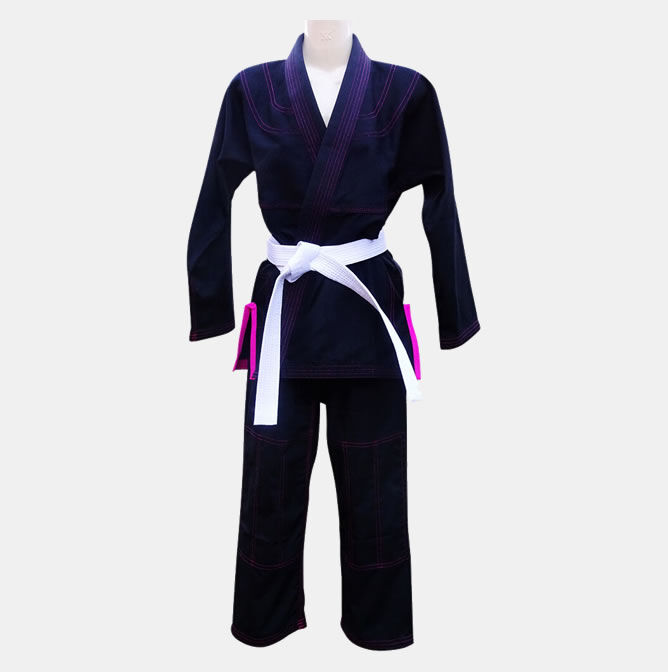
A variation of the European cut with a slightly more tailored profile — the same proportions but with a sleeker fit that reduces excess fabric without restricting movement. It’s a balance between the generous European cut and a fitted athletic silhouette. Pacific Sports offers the modern cut in BJJ gi for both men and women, including female-specific cuts with proportions designed for women’s bodies rather than scaled-down men’s gi.
Taekwondo cut
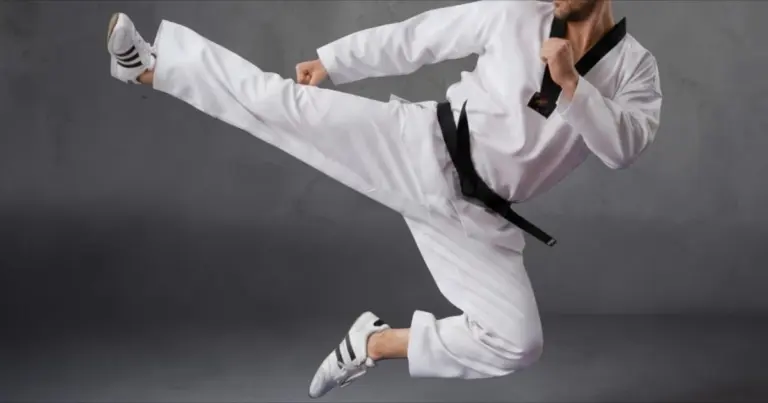
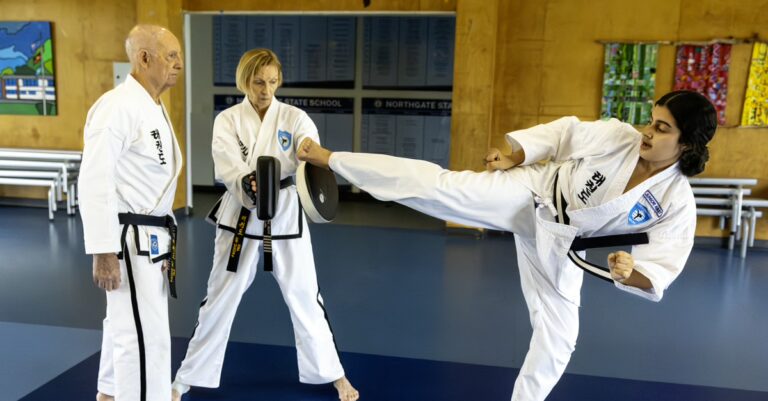
Structurally identical to the European cut, with one significant difference: the jacket has no lapels. Instead of the traditional folded-over lapel of a Karate or BJJ gi, the Taekwondo jacket has a V-neck collar worn like a pullover shirt. This reflects the different demands of Taekwondo — the lapels of a traditional gi jacket are designed to be grabbed for throws, which isn’t part of Taekwondo competition. The V-neck collar is cleaner, more comfortable for striking-focused training, and specifically associated with the dobok style of the discipline.
Pacific Sports Taekwondo gi are available with or without the ITF logo, in both white and black.
Which cut should you choose?
The straightforward answer is: follow your training school. Most dojos have a house style and your instructor will tell you what’s expected. Turning up in a Japanese cut when everyone else is in European, or a Taekwondo V-neck to a Karate class that requires lapels, creates unnecessary friction.
If you’re buying your first gi and haven’t asked yet — ask before ordering. If your school has no preference, European cut is appropriate for Karate, Judo, BJJ, and Jiu-Jitsu. Taekwondo cut for Taekwondo. Kata cut only if you’re specifically competing in kata and your competition requires it.
How cut interacts with fabric and weight
The cut determines the shape; the fabric and weight determine how it feels and performs. Canvas at 16oz in a European cut feels very different to poly-cotton at 8oz in the same cut. For a full explanation of fabric weights — from 8oz ripstop through to 18oz double weave canvas — and which weight suits your level and discipline, see our post on lightweight vs heavyweight gi.
One fabric detail worth knowing: canvas is 100% cotton, but the weaving is denser than standard cotton, making it heavier and thicker. When a gi listing says “cotton” it typically means a plain or twill woven cotton; “canvas” means a denser weave of the same fibre. Heavier canvas gi produce the audible snap on punches and kicks that experienced practitioners recognise as a sign of crisp technique — lighter poly-cotton doesn’t have the same acoustic feedback.
A note on Sambo
If you train Sambo, the uniform — known as a sambovka or kurtka — uses a jacket similar to a judogi top (European cut) combined with wrestling-style shorts and shoes rather than full gi pants. You don’t need to buy a complete gi for Sambo — just the jacket. Pacific Sports sells gi jackets individually if you only need the top.
Specifications
- Cuts available: European, Modern, Taekwondo (V-neck), Japanese (on request), Kata (custom order)
- Fabrics: Poly-cotton, cotton, canvas
- Weights: 8oz to 18oz
- Colours: White, black, blue (availability varies by weight and cut — see product pages)
- Belt: Sold separately in all colours and sizes
- Disciplines: Karate, Taekwondo, Judo, BJJ, Jiu-Jitsu, Sambo (jacket only)
Frequently Asked Questions
What’s the difference between a European and Japanese cut in practical terms?
The main differences you’ll notice wearing them are sleeve length and pants length — Japanese cut is shorter on both. The Japanese cut also has longer lapels. For most training purposes outside Japan, the European cut is more comfortable and more widely accepted. If you’re competing in Japan or in an organisation that specifies Japanese cut, that’s the time to source one specifically.
Can I wear a Karate gi for BJJ, or vice versa?
A standard Karate gi in European cut can be used for BJJ training at club level, but it’s not ideal for long-term use — BJJ gi have significantly heavier stitching at the shoulders, collar, and knees specifically to handle the stress of grappling. A Karate gi used for BJJ will wear out faster at those stress points. For competition BJJ, check your organisation’s gi requirements — most have specifications that a standard Karate gi may not meet.
What is a kata cut gi and do I need one?
A kata cut gi is specifically designed for Karate kata competition — short sleeves, heavy starched canvas, designed to snap loudly and crisply with each technique. You only need one if you’re competing in kata at a level where presentation and sound quality are judged. For regular kata training, a standard European cut gi is perfectly appropriate. If you want a kata cut for competition, contact us directly as they’re made to order.
Why does a Taekwondo gi have a V-neck instead of lapels?
Taekwondo competition doesn’t involve grabbing the jacket for throws, which is the primary function of lapels in Karate, Judo, and BJJ. The V-neck collar reflects the striking focus of Taekwondo — it’s cleaner, lighter, and more appropriate for a discipline where the jacket isn’t a gripping surface. The rest of the cut is essentially European.
Does the cut affect sizing?
The cut affects proportions but not the size numbering. A size 4 in European cut and a size 4 in Japanese cut are both sized to fit the same person — the difference is in how the fabric is distributed, not the overall size. Always check the size chart on the specific product page and measure yourself rather than assuming your size transfers between cuts or brands.
What does “pre-shrunk” mean on a gi listing?
Pre-shrunk gi have already been washed during manufacturing to trigger initial cotton shrinkage — they’ll shrink minimally further in regular washing. Non-pre-shrunk gi are made with a shrinkage allowance built in — they’ll feel about one size too large when you first try them on, and shrink to the correct fit after washing. Either way, buy your regular size. Wash in cold water to slow any further shrinkage over time.
When considering gi cut types martial arts Australia, it’s essential to understand the specific requirements and preferences of your chosen discipline.