Martial Arts Uniform Sizes Guide
Martial Arts Uniform Sizing: How to Get the Right Fit
Martial arts uniform sizing works differently to regular clothing, and if you don’t understand how it works before you buy, you’ll end up with a gi that’s either too short in the arms and legs or too tight across the chest and thighs. Neither is comfortable to train in. Here’s how to get it right first time.
How martial arts uniforms are sized
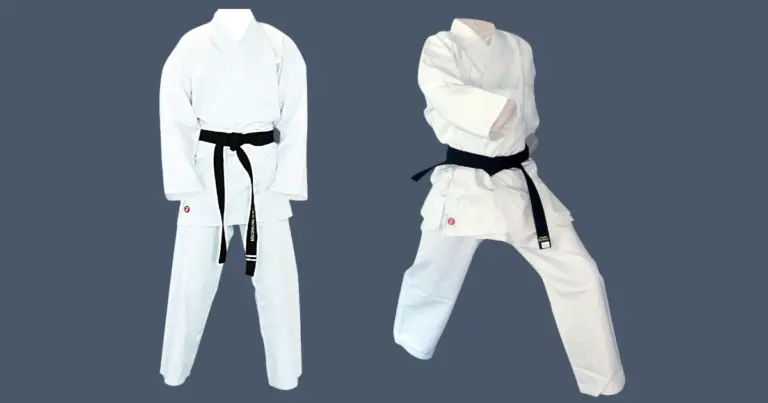
Gi are sized primarily by height, not by the combination of height and width that you’d find in regular clothing. A size 4/170, for example, is designed for someone approximately 168–177cm tall. A size 5/180 fits someone around 178–187cm. These size numbers assume an average build for that height range.
The problem is that not everyone is average. Gi don’t come in width fittings — there’s no equivalent of “regular”, “slim”, or “athletic” fit. This means that if your body proportions don’t match the size chart’s assumptions, you’ll need to make a deliberate choice about which measurement to prioritise.
Buy to fit your largest measurement
The rule to follow is simple: always buy a size that fits your largest measurement, even if that means the gi is slightly too long or too loose elsewhere.
Here’s why this matters in practice:
If you’re tall and slim for your height, buy the size that fits your height. The gi will be roomier than ideal across the chest and waist, but the sleeves and pants legs will be the right length. You can then use your belt to manage the extra fabric in the jacket, or take the gi to any clothing alterations shop to have it taken in.
If you’re broader or heavier than average for your height, you’ll need to buy a size larger than your height alone would suggest. This gives you the chest and thigh room you need to move freely. Yes, the jacket will be longer in the body and the sleeves, and the pants will be long in the leg — but these are easy and inexpensive fixes at any alterations shop. What’s not easy to fix is a gi that’s too tight across the shoulders or thighs. You won’t be able to perform techniques properly, and you’ll be at risk of tearing the seams every time you kick or reach forward.
The bottom line: a gi that’s slightly too large can be altered or managed. A gi that’s too small in the wrong places will restrict your movement and eventually split at the seams.
What can be altered
Most clothing alterations shops can shorten gi sleeves and pants legs quickly and inexpensively. These are straightforward hemming jobs — no specialist knowledge of martial arts uniforms is needed. If you need the jacket taken in at the sides, that’s also a standard alteration.
What’s harder to alter is length that’s been cut too short — you can’t add fabric that isn’t there. This is why buying slightly larger is always the safer direction to err.
Shrinkage
Cotton gi fabric shrinks, and how much depends on whether your gi is pre-shrunk or not.
Pre-shrunk gi have already been washed during manufacturing to trigger the initial shrinkage — they’ll shrink minimally further in regular use. Buy your regular size.
Non-pre-shrunk gi are made with a shrinkage allowance built in. When you first try one on it should feel about one size too large — that’s intentional. After washing in cold water it will shrink down to a proper fit. Again, buy your regular size — don’t size down to account for shrinkage, the allowance is already built in.
Always wash gi in cold water. Hot water accelerates and exaggerates cotton shrinkage beyond the intended allowance.
Sizing for children
Children grow quickly, which adds a layer of complication to gi sizing. A few practical guidelines:
If your child falls between two sizes, choose the larger one. The extra room is manageable — an overly large gi is distracting, but a gi that’s too small after a growth spurt is useless.
That said, don’t buy dramatically oversized thinking you’ll get more wear out of it. A gi that’s far too big is just as distracting for a child as one that’s too small. A child who’s constantly adjusting their uniform isn’t focusing on training. The aim is a gi that fits well now with a little room to grow — not one they’ll grow into over two years.
For children just starting out, it’s also worth keeping price in mind. Kids’ interests change. A beginner’s first gi doesn’t need to be the most expensive option — a well-fitted, affordable gi that they can actually train in is far more valuable than a premium gi they outgrow or lose interest in within a few months.
Before you order
Take these three measurements before consulting any size chart:
Your height in centimetres. Your chest measurement at the widest point. Your waist measurement.
Then check the size chart for the specific gi you’re buying — sizing varies between fabric weights and styles, so don’t assume your size in one gi transfers directly to another. If your measurements put you between two sizes or suggest different sizes for height vs width, go with the larger size and plan to alter if needed.
If you’re unsure, contact Pacific Sports before ordering — it’s much easier to get the size right first time than to manage a return and exchange.
Frequently Asked Questions
My height says size 4 but my chest says size 5. Which do I buy?
Buy size 5. A gi that fits your chest and is slightly long in the sleeves and body is easy to manage — you can have it hemmed or simply roll the sleeves. A gi that fits your height but pulls tight across the chest will restrict every technique you attempt and is likely to tear at the seams.
How much do cotton gi shrink?
Pre-shrunk gi shrink minimally — usually less than 2–3% — in regular cold washing. Non-pre-shrunk gi shrink more on the first wash, but Pacific Sports non-pre-shrunk gi are made with this shrinkage built into the sizing, so you should still buy your regular size. Always wash cold to keep shrinkage predictable and gradual.
Can I get my gi altered at a regular tailor or alterations shop?
Yes. Shortening sleeves and pants legs are standard hemming jobs that any alterations shop can handle. They don’t need experience with martial arts uniforms specifically — gi fabric is cotton or canvas, which is straightforward to work with. Bring your gi in wearing it if possible so the alterations person can assess the fit directly.
My child is between sizes. How much growing room should I allow?
One size up is enough. Two sizes up is too much — a child training in a gi that’s dramatically oversized will spend the session adjusting it rather than learning. One size up gives growing room without becoming a distraction. When they grow out of it, replace it — gi are not so expensive that wearing an ill-fitting one is worth the compromise to their training.
Do gi pants and jackets always come in matching sizes?
Complete gi sets come with matched jacket and pants in the same size. If your proportions mean you need different sizes for jacket and pants, Pacific Sports sells them separately — you can order a size 4 jacket and a size 5 pants, for example, and get the fit right for both parts of your body independently.
Is sizing the same across all gi styles — Karate, Taekwondo, BJJ?
The size numbering system is similar across styles, but the specific measurements for each size number can vary between gi types and fabric weights. Always check the size chart for the specific gi you’re ordering rather than assuming your size carries across. BJJ gi in particular often use a different sizing convention — A1, A2, A3 etc — which doesn’t directly correspond to the numbered sizing used for Karate and Taekwondo gi.
For a comprehensive overview, refer to our martial arts uniform sizing guide Australia to ensure you choose the correct size.
For further details, refer to our martial arts uniform sizing guide Australia to ensure you choose the correct size.