BJJ Gi, Judo Gi and Karate Gi Differences
BJJ and Judo Gi: How They Differ and Why It Matters
If you’ve trained in Karate or Taekwondo and then started BJJ or Judo, the first thing you notice is that the gi feels different. It’s heavier, more structured, and fits closer to the body. That’s not a manufacturing variation — it’s deliberate design for the specific demands of grappling arts. Understanding why BJJ and Judo gi are built the way they are helps you choose the right one and understand what you’re buying. The BJJ gi judo gi difference is crucial in making the right choice.
Why grappling gi are different from striking art gi
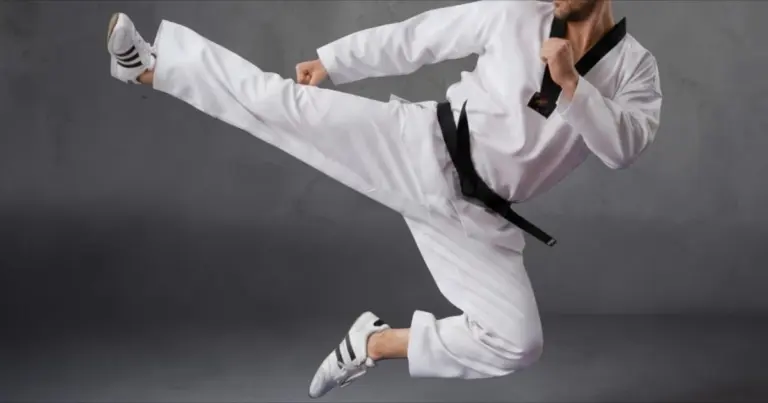
In Karate and Taekwondo, the gi is grabbed occasionally — for self-defence demonstrations and some sparring drills — but the primary stress on the fabric comes from movement: kicks, punches, and stances. The gi needs to move freely and not restrict range of motion.
In BJJ and Judo, the gi is grabbed constantly. Every throw in Judo involves gripping the collar or sleeve. Every guard pass in BJJ involves controlling the gi. Every submission attempt may involve pulling the collar across the opponent’s neck. A grappling gi is under continuous tensile stress during every training session and every competition match — the collar, sleeves, and shoulders are being pulled hard, repeatedly, for the entire duration of training.
This is why grappling gi are constructed completely differently to striking art gi. The construction isn’t heavier because of tradition — it’s heavier because the gi literally needs to withstand that stress without tearing.
BJJ gi: construction and design
The jacket
A BJJ gi jacket is more fitted than a Karate gi. The cut is closer to the body, the skirt is shorter, and the sleeves are narrower and shorter than a standard Karate gi. These aren’t aesthetic choices — they’re tactical ones. A jacket with excess fabric gives your opponent more to grip. Shorter, tighter sleeves are harder for an opponent to control. A shorter skirt reduces the fabric available for guard grips from below.
The reinforced stitching at the grip points is the most important construction detail. The collar, shoulders, chest, and sleeve edges all feature multiple lines of stitching — typically five, seven, or more — specifically because these are the areas grabbed most frequently and under the greatest force. A BJJ gi collar must be able to withstand thousands of collar grips without delaminating or tearing. Low-quality BJJ gi fail at these points first.
The collar itself is distinctive. BJJ gi collars are stiffened and reinforced — typically with rubber or foam inside — which makes them harder to collapse and easier to grip correctly. A Karate gi collar is soft and flat; a BJJ gi collar is firm and structured.
The fabric: pearl weave jacket
Most BJJ gi jackets are made in pearl weave — a fabric construction that creates a distinctive bumpy texture across the surface. Pearl weave sits in the medium weight range, typically 250–350 gsm (grams per square metre), and provides the right balance of durability, weight, and stiffness for grappling competition.
The weave is denser than standard cotton, which gives the jacket its characteristic feel and makes it resistant to tearing under the stress of repeated gripping. Most major BJJ competition organisations — including the IBJJF — specify minimum fabric requirements for competition gi, and pearl weave in the 250–350 gsm range meets these requirements while staying light enough to meet weight limits.
The pants: ripstop weave
BJJ gi pants are almost always made in ripstop fabric — a different weave to the jacket. Ripstop incorporates reinforcing threads woven in a grid pattern at regular intervals through the fabric. If the pants tear or snag during training, the reinforcing thread grid stops the tear from propagating — the damage stays localised rather than running across the fabric.
This matters specifically for BJJ pants because the knees are under constant stress during guard work, passing, and ground movement. The knees of BJJ pants also feature additional reinforced stitching for the same reason — this is one of the most distinctive visual differences between a BJJ gi and a Karate gi when you look at them side by side.
The pants also typically feature an elasticated waistband with either an internal drawstring or an external looped drawstring — the external loop is a BJJ-specific feature that allows very precise adjustment.
Women’s cut BJJ gi
Standard gi are cut for male body proportions and scaled down for women, which produces a poor fit for most female practitioners — too wide at the shoulders, too narrow at the hips, and wrong in the torso length. Women’s cut BJJ gi are designed specifically for female body proportions: narrower shoulders, wider hip allowance, adjusted torso length, and sometimes a more fitted overall cut. For women training BJJ seriously, a purpose-cut gi makes a significant difference to comfort and function. Pacific Sports offers women’s cut BJJ gi with hot pink trim as a visible identifier of the female-specific cut.
Judo gi: how it differs from BJJ gi
Judo gi and BJJ gi look similar and come from the same origin — the judogi that Jigoro Kano designed in the late 19th century was the template for both. But the two sports have diverged in their demands, and the gi have diverged with them.
Fit and cut
Judo gi are cut looser than BJJ gi. The jacket has longer sleeves and a longer skirt; the pants are wider. This reflects the different grip dynamics of the two sports. Judo competition involves standing grappling with throws — having fabric to grip is a feature of the game rather than something to minimise. The extra fabric in a judo gi gives both practitioners something to work with for kuzushi (off-balancing) and throwing entries.
BJJ, which developed from Judo but incorporated significant ground fighting, moved toward a tighter cut partly to reduce the gripping advantage on the ground — a sport where the gi is used as a weapon by both practitioners simultaneously in a way that standing Judo doesn’t replicate.
Fabric weight
Judo gi are typically heavier than BJJ gi — often in the 700–900 gsm range for the jacket, compared to 250–350 gsm for most BJJ gi. The IJF (International Judo Federation) specifies minimum fabric requirements for competition gi, and these requirements favour heavier, more durable fabric than most BJJ organisations specify.
The heavier fabric in a judo gi is also a functional requirement for the throwing game — a lighter fabric tears more easily when grabbed for the explosive off-balancing and throwing techniques that define Judo. The extra weight is a trade-off most judo practitioners accept as necessary for the durability required.
Collar construction
Judo gi collars are typically wider than BJJ gi collars. This is again functional — in Judo, the collar grip is the primary attacking grip, and a wider collar gives more material for both practitioners to work with. The stiffness requirements are similar to BJJ — the collar must resist collapsing under gripping force — but the dimensions differ.
Sleeve and pant length requirements
Both the IJF and IBJJF specify sleeve and pant length requirements for competition gi. IJF rules require sleeves to reach within a certain distance of the wrist; IBJJF rules have similar but slightly different Specifications. If you’re buying a gi specifically for competition, check the current rules for your organisation before purchasing — a gi that doesn’t meet sleeve or pant length requirements won’t be permitted on the competition mat.
Can you use a Judo gi for BJJ, or vice versa?
At club training level, yes — either works for the other discipline, and many practitioners who train both use the same gi for both. The practical differences become relevant in competition.
A Judo gi used for BJJ competition may not meet IBJJF sleeve length requirements — the longer sleeves of a judo gi can exceed the maximum sleeve length specified. A BJJ gi used for Judo competition may not meet IJF fabric weight requirements — the lighter BJJ gi fabric may be below the minimum weight the IJF specifies.
For training, the looser judo gi in a BJJ class gives your partner more to grip — which some coaches actually use deliberately as a training tool. The tighter BJJ gi in a judo class is fine for most techniques but may feel restrictive for some throwing entries that rely on sleeve fabric.
Gi or no-gi for BJJ?
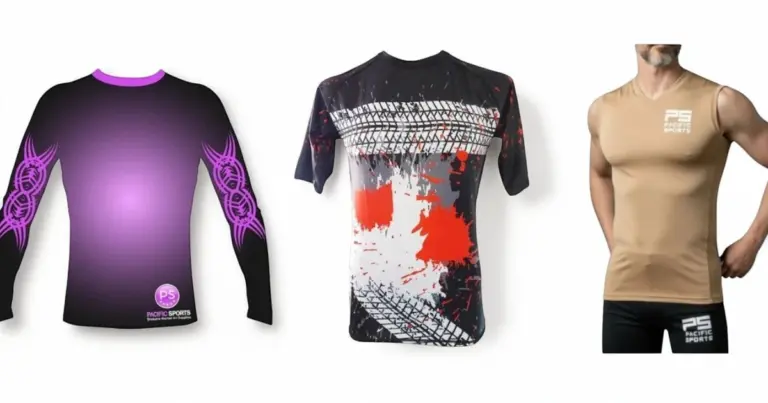
This is a separate question worth briefly addressing. No-gi BJJ — training in rash guards and shorts rather than a gi — has grown significantly in recent years and is now a major part of the sport. The techniques overlap but differ: gi BJJ includes collar chokes, sleeve grips, and lapel guards that simply don’t exist in no-gi. No-gi BJJ places more emphasis on body locks, underhooks, and leg entanglements that translate directly to wrestling and submission grappling.
Most coaches recommend learning gi BJJ first — the slower pace and additional grip points provide more learning opportunities for beginners. As skill develops, training both gi and no-gi gives the most complete grappling education. Pacific Sports offers both gi for training and rash guards and compression wear for no-gi sessions.
Care for grappling gi
The same rules apply as for any gi — wash after every session, cold water, no bleach, no fabric softener, air dry. The specific consideration for BJJ and Judo gi is drying time. Pearl weave jackets are denser than Karate gi fabric and take longer to dry fully — particularly in humid conditions. Make sure the jacket is completely dry before storing to avoid mildew developing in the thick weave. Keeping two gi in rotation is even more important for grapplers than for striking art practitioners, because the washing and drying cycle takes longer.
Specifications
- BJJ gi jacket fabric: Pearl weave, typically 250–350 gsm
- BJJ gi pants fabric: Ripstop weave, typically 8oz–10oz
- Judo gi fabric: Typically 700–900 gsm single or double weave
- Colours: White, blue, black (IBJJF permits all three; check your organisation’s rules)
- Reinforced stitching: Collar, shoulders, chest, sleeves, knees
- Women’s cut: Available in BJJ gi with female-specific proportions
- Belt: Sold separately
- Care: Machine wash cold, air dry fully, no bleach or fabric softener
Frequently Asked Questions
Can I use a Karate gi for BJJ training?
For casual introductory training, yes — a Karate gi will survive a few sessions. For regular training, it’s not suitable. The collar will delaminate under repeated gripping, the lighter stitching at the shoulders and sleeves will tear, and the fabric weight won’t meet most competition requirements. Invest in a proper BJJ gi once you commit to training regularly.
What does gsm mean on a BJJ gi?
GSM stands for grams per square metre — the standard measurement for fabric weight used in BJJ gi. It’s equivalent to the oz/yd² measurement used for Karate gi, just in metric units. A 250 gsm pearl weave jacket is a lighter competition gi; 350 gsm is heavier and more durable. Most experienced practitioners have a lighter gi for competition and a heavier gi for training.
Why do BJJ gi pants use a different fabric to the jacket?
Because the stress they face is different. The jacket is primarily under tensile stress from gripping — it needs dense, tear-resistant fabric. The pants are primarily under abrasion stress from mat movement and lateral stress from guard positions — ripstop fabric handles abrasion and resists tearing when snagged. Using the optimal fabric for each piece produces a better overall gi than using one fabric throughout.
Are women’s cut BJJ gi just smaller versions of men’s gi?
No — and this distinction matters. A women’s cut gi is proportioned differently: narrower shoulders, wider hips, shorter torso, and adjusted sleeve length for female arm proportions. A scaled-down men’s gi on a female body typically fits poorly across the shoulders and hips simultaneously. If you’re a woman training BJJ regularly, a purpose-cut gi is worth the investment for both comfort and function.
How do I know if my gi meets competition requirements?
Download the current rulebook for your competition organisation — IBJJF, IJF, or whatever body governs your event — and check the gi specifications section. Key requirements typically cover fabric weight, sleeve length, pant length, collar dimensions, and permitted colours. Requirements change periodically, so check the current version before each competition rather than relying on older information.
How long should a quality BJJ gi last?
A well-made BJJ gi washed properly after every session should last two to four years of regular training. The collar is usually the first area to show wear — look for delamination or softening of the collar structure as an indicator that the gi is approaching end of life. The knee reinforcement on the pants is the second area to check. A gi that’s cared for correctly — cold washing, full air drying, no bleach — lasts significantly longer than one that’s washed hot and tumble dried.