Buying a Karate Gi Online in Australia
How to Choose a Karate Gi: A Practical Buying Guide
When Pacific Sports was founded in 1972, one of the driving reasons was that martial arts gear was expensive and out of reach for many people who wanted to train. That hasn’t changed as a principle — good equipment should be accessible. But to buy well, you need to understand what you’re buying. This guide covers everything that matters when choosing a karate gi, whether it’s your first or your tenth.
What a karate gi consists of
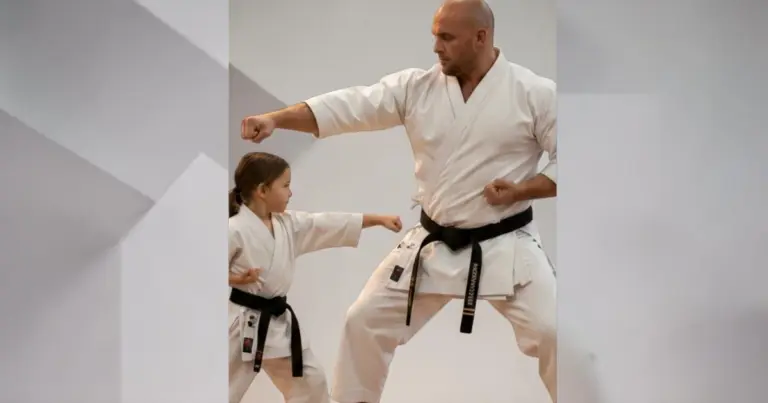
A karate gi has three parts: jacket, pants, and belt. One important note on the belt: canvas gi don’t include one. This is because canvas uniforms are typically worn by more experienced practitioners who already have a belt in their current rank colour. If you’re buying a canvas gi as your first uniform, white belts are available separately.
The jacket
Karate gi jackets come in two main styles.
The traditional kimono-style jacket has two overlapping sides secured by inner ties at the waist. The left side crosses over the right and is held in place by the belt. This is the standard jacket style for Karate, Judo, BJJ, and Jiu-Jitsu. A logo may be screen-printed on the back and a school patch stitched on the front. Some jackets feature black strips on the shoulders or lower lapels to identify black belt holders.
The V-neck jacket — sometimes called a T-shirt style — is used in Taekwondo (dobok) rather than Karate. It pulls over the head like a shirt rather than wrapping over. The V-neck collar may be black to signify black belt rank. If you’re buying specifically for Karate, you want the traditional kimono-style jacket.
The pants
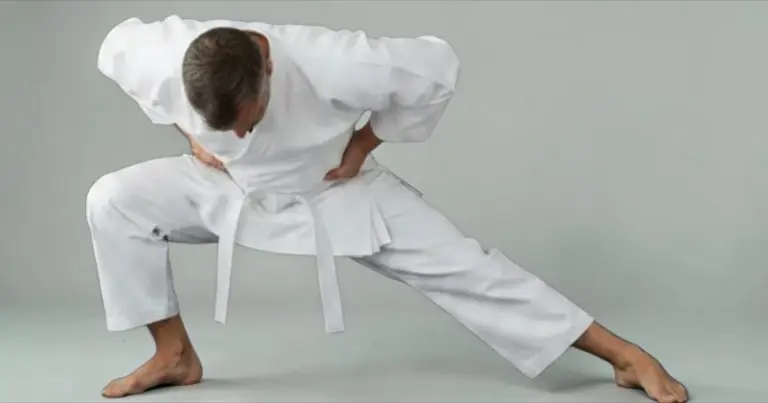
Karate pants are designed specifically for kicking. The crotch is gusseted — an extra panel of fabric sewn into the inner seam — which allows the pants to open fully during high kicks without stressing the seams. Without a gusset, executing a high kick risks splitting the inner seam every time.
The waistband is elasticated with an inner drawstring for fine adjustment. Traditional karate pants used a cord waist tied through loops at the sides — a few practitioners still prefer this style, but the elasticated waist with drawstring is now the standard and more convenient for most people.
Fabric: cotton or poly-cotton?
Karate gi are made from either 100% cotton or a cotton-polyester blend, typically 55% cotton and 45% polyester.
100% cotton is a natural fibre that breathes well, keeping you cooler during training than poly-cotton does. This is true regardless of the fabric weight — a 12oz canvas cotton gi will feel heavier than an 8oz poly-cotton, but it will still be more comfortable in terms of breathability. The downside of cotton is shrinkage — more on that below.
Poly-cotton blend is less expensive, easier to care for, and less prone to shrinking. It’s a practical choice for beginners, children, or anyone who doesn’t want to invest heavily in a first uniform. The one downside worth knowing: when you sweat heavily, poly-cotton can stick to the skin and become slightly see-through. This isn’t a quality issue — it’s simply a characteristic of the fabric. For most training purposes it’s not a problem, but it’s worth knowing before you buy.
Fabric weight: what the oz number means
The oz weight describes how much a square yard of the fabric weighs — not the total weight of the finished garment. A higher number means a denser, heavier fabric. Here’s what each weight feels like in practice:
7oz–8oz — lightweight
This is the weight most new students receive as their first uniform when they enrol at a martial arts school. Light, loose, and easy to wear. Wearing a martial arts uniform for the first time feels different regardless of weight — after a few classes and washes, an 8oz gi becomes one of the most comfortable pieces of clothing you own. Experienced practitioners also reach for 8oz in summer when they need something light and airy.
10oz — lightweight canvas
The lightest canvas option. For practitioners who want the feel and snap of canvas without the weight of heavier options, 10oz is a good choice. Canvas gi produce an audible snapping sound on crisp techniques that lighter poly-cotton doesn’t — the 10oz gives you that without the restriction of heavier weights.
12oz — light-medium weight canvas
Often the first canvas gi for practitioners moving up from lightweight uniforms. The fabric has enough body that it doesn’t sag or droop the way lightweight gi do, which makes it particularly good for gradings and competitions where you want to look sharp. The snap on techniques is pronounced and satisfying. This is arguably the most versatile canvas weight — suitable for regular training and formal occasions alike.
14oz — medium weight canvas
You’ll feel the density of this fabric when you first put it on — it’s noticeably stiffer than 12oz but softens after washing. The snap on techniques is excellent. This weight is the choice of experienced students and instructors who want a uniform that looks professional for tournaments and gradings and will last for years of hard training.
16oz–18oz — heavyweight canvas
The most durable option and the longest-lasting. The snap on techniques is outstanding and the professional appearance is unmatched. This is typically the choice of senior instructors, competitors doing kata demonstrations, and practitioners who prioritise longevity above everything else.
One honest note: 16oz and above is not for everyone. For smaller or lighter-framed practitioners, the weight and stiffness can feel restrictive — particularly for styles involving jumping kicks and vigorous sparring. In warm training conditions without air conditioning, the extra weight generates more heat. For larger-framed practitioners training in temperate conditions who want a uniform they’ll keep for a decade, 16oz is excellent. For most other practitioners, 14oz offers most of the same durability with less of the weight.
Shrinkage
Cotton gi shrink. How much depends on whether the gi is pre-shrunk or not.
Pre-shrunk gi have been washed during manufacturing to trigger the initial shrinkage — they’ll shrink minimally further in regular cold washing. Buy your regular size.
Non-pre-shrunk gi are made with a shrinkage allowance built in — they’ll feel about one size too large before the first wash and shrink down to the correct fit afterwards. Again, buy your regular size. Always wash in cold water — hot water accelerates shrinkage beyond the intended allowance.
Poly-cotton gi shrink significantly less than 100% cotton gi and are more forgiving in this regard.
Stitching
Stitching quality matters most at the pressure point areas — collar edges, sleeve edges, crotch seam, and side seams. These are the areas under most stress during training. Pacific Sports gi feature five, six, seven or more lines of stitching at these areas, which makes them significantly more tear-resistant than single or double-stitched alternatives. Check the number of stitching lines at the collar when comparing gi — it’s one of the clearest indicators of build quality.
Colour
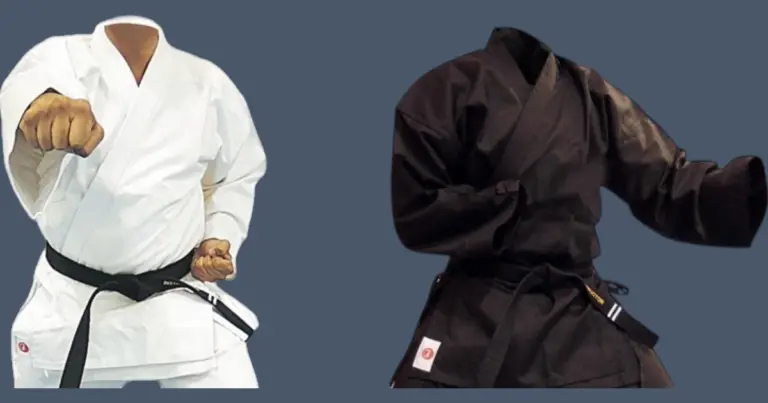
White is the traditional and most widely accepted colour for Karate gi. Black and blue are also available and worn in some schools. Always check with your instructor before buying anything other than white — many schools and all major competition organisations have specific colour requirements. See our full guide on gi colour rules by discipline for more detail.
Fit and sizing
Gi are sized by height, not by the combined height-and-width measurement of regular clothing. If your chest or waist is broader than average for your height, buy the size that fits your widest measurement and have the sleeves or legs shortened at an alterations shop if needed. A gi that’s slightly too long is manageable; one that’s too tight across the chest or shoulders restricts every technique you attempt.
Check the size chart on the specific product page before ordering — sizing varies between fabric weights and styles. For a detailed sizing guide including how to measure and what to do if you’re between sizes, see our post on martial arts uniform sizing.
Care
Wash after every session in cold water with mild detergent. No bleach — it degrades the cotton threads. No fabric softener — it coats the weave and traps bacteria rather than removing it. Air dry rather than tumble dry. Iron only for grading and competition — repeated ironing weakens the threads over time. Keep two gi if you train frequently so one can wash and dry properly between sessions.
Frequently Asked Questions
Does my first gi need to be canvas?
No. A lightweight 8oz poly-cotton gi is appropriate and practical for beginners. Canvas gi are heavier, stiffer, and more durable — qualities that matter more as your training intensifies. Start with lightweight poly-cotton and move to canvas when you’re training regularly and want something that will last longer and perform better for formal occasions.
Should I buy a gi with or without a belt?
Most lightweight gi come with a white belt included. Canvas gi are sold without a belt. If you’re a beginner buying a canvas gi, purchase a white belt separately. If you already have a belt in your current rank colour, you don’t need a new one unless you’ve been promoted.
Can children wear canvas gi?
Yes, but lightweight poly-cotton is often more practical for children. Kids grow quickly and outgrow uniforms regularly — investing in expensive canvas for a child who’ll need a new size in six months isn’t always sensible. A well-fitting lightweight poly-cotton gi suits most children’s training needs and is more affordable to replace when they grow.
How long should a quality gi last?
A well-made canvas gi cared for properly — cold washing, air drying, no bleach — should last several years of regular training. The collar and lapel edges typically show wear first from repeated gripping and throwing. Heavyweight canvas lasts longest; lightweight poly-cotton wears faster. Keeping two gi in rotation and washing both after every session extends the life of both significantly.
What’s the difference between a karate gi and a BJJ gi?
The fundamental structure is the same — jacket, pants, belt. BJJ gi have significantly more reinforced stitching at the shoulders, collar, and knees to handle the specific stress of ground grappling where the gi is grabbed and pulled continuously. Karate gi have reinforced stitching at the collar and sleeve edges for the same reason but generally less overall reinforcement than BJJ gi. For casual cross-training, a karate gi works in a BJJ class; for serious BJJ training and competition, a BJJ-specific gi is the better choice.
Is a more expensive gi always better?
Not necessarily. The factors that determine gi quality — fabric weight, stitching lines, construction — are visible and specific. A mid-priced gi with seven lines of stitching at the collar and pre-shrunk 12oz canvas will outlast and outperform an expensive gi with inferior construction. Pacific Sports gi are priced to be accessible because the founders of the business — both black belts who started training in 1972 — know that good equipment shouldn’t be out of reach. Check the construction details rather than the price tag.