Martial Arts Cotton Uniform Vs Poly-Cotton Mix Uniform
Cotton vs Poly-Cotton Karate Gi: Why Cotton Is Worth the Extra Cost
Both cotton and poly-cotton karate gi are made to a high standard and both will serve you well in training. The choice between them isn’t about quality — it’s about what matters most to you in how a gi feels, performs, and ages over time. If you’re trying to decide which to invest in, here’s an honest comparison.
Why most practitioners eventually choose cotton
Poly-cotton is the practical starting point for most people — it’s less expensive, less likely to shrink, and easier to care for. These are real advantages, particularly for beginners or parents buying a first uniform for a child who may outgrow it quickly. There’s nothing wrong with poly-cotton, and Pacific Sports stocks both.
But most practitioners who train long-term migrate to 100% cotton. The reasons are consistent and come down to four things.
Breathability in hot conditions
Cotton is a natural fibre with an open structure that allows air to circulate through the fabric. This is what makes it breathe so well — heat generated by your body passes through the fabric rather than being trapped against the skin. In Australian summer conditions, or in a training hall without air conditioning, this difference is immediately noticeable.
Poly-cotton traps air more than pure cotton does. During a hard session, this means more heat retention and sweat accumulation against the skin. Poly-cotton can also become slightly see-through when saturated with sweat — not a quality issue, just a characteristic of the synthetic component in the fabric blend. Cotton doesn’t do this.
Comfort that improves with wear
Cotton softens with each wash. A new cotton gi feels good; one that’s been through fifty washes feels even better — softer, more supple, and broken in to the shape of your body. Poly-cotton doesn’t develop this quality to the same degree. It remains consistent in texture, which is fine, but it doesn’t become the gi you reach for automatically because it feels like a second skin.
Cotton canvas gi also have a characteristic that practitioners who’ve worn them appreciate: the fabric stands slightly away from the skin rather than lying flat against it. This creates a small air gap that wicks sweat away from the body rather than trapping it. In light and heavy canvas weights from 10oz upward, this effect is particularly noticeable during intense training.
Staying bright white
This is the most visible long-term difference between the two fabric types. Cotton gi wash up bright white consistently and maintain that appearance for years. Poly-cotton gi gradually grey with age — not dramatically, but noticeably over time. For practitioners who care about the appearance of their gi for grading, competition, and demonstration — and most serious practitioners do — cotton holds its look significantly better.
Skin sensitivity
Cotton is a natural fibre with no synthetic coatings or chemical treatments. It’s recommended by dermatologists for people with sensitive skin and is used in medical dressings for the same reason. For practitioners who find that poly-cotton or synthetic training wear causes skin irritation, a 100% cotton gi typically resolves the problem. If you’ve had issues with other training clothing irritating your skin, cotton is the straightforward answer.
Where poly-cotton still makes sense
Being honest about this matters. Poly-cotton has genuine advantages in specific situations:
For beginners who aren’t yet sure they’ll continue training, a poly-cotton gi is a sensible first investment — less expensive and easier to care for while you find your feet. For children who grow quickly and need a new size every year or two, the same logic applies. For practitioners in very hot, humid conditions where even cotton feels heavy, a lightweight 8oz poly-cotton breathes adequately and dries faster than heavier cotton. And for practitioners who simply prefer a gi that requires minimal attention — no concerns about shrinkage, straightforward washing — poly-cotton delivers that.
Cotton canvas: the best of both worlds
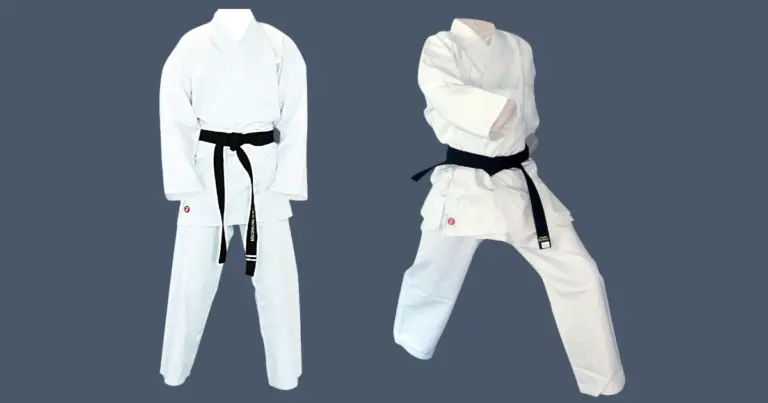
If you want the breathability and comfort of cotton with the durability and professional appearance of a heavier fabric, cotton canvas is the answer. Canvas is 100% cotton woven more densely than standard cotton — heavier, stiffer, and more durable, but with the same breathability and skin-friendly properties as lighter cotton. Available in weights from 10oz to 18oz, canvas gi are the choice of most experienced practitioners and instructors.
The snap on techniques — the audible crack of a well-executed punch or kick — is more pronounced in canvas than in lighter cotton or poly-cotton, and it improves as the fabric weight increases. For kata, demonstrations, and grading, a well-pressed canvas gi in 12oz or 14oz looks and sounds the part in a way that lighter fabrics can’t match.
Quick comparison
- Breathability: Cotton better than poly-cotton, especially in heat
- Comfort over time: Cotton softens and improves with wear; poly-cotton stays consistent
- White retention: Cotton stays bright white longer; poly-cotton greys with age
- Skin sensitivity: Cotton hypoallergenic; poly-cotton may irritate sensitive skin
- Shrinkage: Cotton shrinks more; poly-cotton shrinks less
- Price: Poly-cotton less expensive; cotton costs more
- Care: Both machine washable; poly-cotton more forgiving
- Best for beginners: Poly-cotton — lower cost, easier care
- Best for experienced practitioners: Cotton or canvas — comfort, appearance, durability
Frequently Asked Questions
Will a cotton gi shrink every time I wash it?
The most significant shrinkage happens in the first few washes. After that, cold washing produces minimal further shrinkage. Pre-shrunk gi have already been washed during manufacturing and shrink very little further. Non-pre-shrunk gi are made with a shrinkage allowance built in — they feel about one size too large before the first wash and shrink to a proper fit afterwards. Always wash cold to keep shrinkage predictable and gradual.
Can I switch from poly-cotton to cotton without changing size?
Your gi size is based on your height and body measurements rather than the fabric type, so the size number will be the same. The fit might feel slightly different — cotton canvas in particular has more body and structure than poly-cotton — but you’d buy the same size. Check the size chart for the specific gi you’re ordering as measurements can vary slightly between styles.
How do I keep a white cotton gi bright white?
Wash after every session in cold water with mild detergent. Don’t use bleach — it whitens temporarily but degrades the cotton threads over time. Don’t use fabric softener — it coats the fabric and traps bacteria. Sun drying helps — natural UV light has a mild bleaching effect that keeps white fabric bright. A gi that’s washed regularly and dried in sunlight will stay noticeably whiter than one washed infrequently or dried indoors.
Is cotton canvas suitable for beginners?
It can be, but it’s not the most practical starting choice. Canvas gi are heavier, stiffer, and more expensive than lightweight poly-cotton or cotton gi. For a beginner who’s still finding out whether they’ll continue training, a lightweight 8oz poly-cotton is a more sensible first investment. Once you know you’re committed, moving to cotton canvas is a natural progression.
Does the fabric type affect how techniques feel?
Yes, particularly for canvas weights. The density of the canvas weave produces a snapping sound and tactile feedback on crisp techniques that lighter fabric doesn’t. Many practitioners find this feedback useful — you can hear and feel the difference between a clean, precise technique and a sloppy one. This is one reason why canvas gi are popular for kata training and competition, where technique precision is being judged.
What if I have sensitive skin?
100% cotton is the right choice. It’s a natural fibre with no synthetic coating and is recommended by dermatologists for people with skin sensitivities. If you’ve had reactions to synthetic training wear or poly-cotton clothing in the past, a pure cotton gi should resolve the issue. Wash it before wearing for the first time to remove any manufacturing residue.