Is Lycra the Same as Spandex? And Why It Matters for Your Compression Wear
Lycra, Spandex Elastane Compression Wear
If you’ve ever looked at the label on a pair of compression shorts and seen “spandex” on one brand and “Lycra” on another, you might have wondered whether they’re different materials. They’re not. Lycra and spandex are the same fibre — just different names for it. Here’s the story behind the name confusion, and why this particular fibre is so important to compression wear for martial arts.
The Lycra/spandex story
In the 1950s, the DuPont Corporation developed a new synthetic fibre — a polyurethane-based material with extraordinary elasticity. They branded it “Lycra”. The name became so well-known that it’s still the most recognised term for the fibre in many parts of the world, particularly in Australia and Europe. In the United States, the same fibre became known as “spandex” — a word that’s said to be an anagram of “expands”, which neatly describes what the material does. The fibre also goes by other names including elastane, Numa, Spandelle, and Vyrene. Different names, same polyurethane fibre underneath. So when you see a compression garment listed as “85% polyester, 15% Lycra” or “85% polyester, 15% spandex”, you’re looking at the same thing. Pacific Sports compression wear uses an 85/15 polyester-spandex blend — the industry standard for sports compression garments.
Why spandex matters for compression wear
Spandex has a few properties that make it genuinely irreplaceable in compression wear — no other fibre does what it does. The stretch is extraordinary. Spandex can stretch to several times its original length and return completely to its original shape. This is what gives compression wear its characteristic snug fit without feeling tight or restrictive — the fabric stretches with your body through every kick, roll, and takedown, then bounces back without sagging or deforming. A gi or shorts made from cotton alone would stretch out and stay stretched; the spandex component is what makes compression wear hold its shape over time. Spandex blends easily with other fibres. On its own, spandex wouldn’t be practical for training — it’s too light and doesn’t manage moisture well. But blended with polyester at 15%, it adds elasticity and shape retention to a fabric that already handles moisture wicking and durability well. The polyester does the structural and technical work; the spandex provides the stretch and recovery. The resulting fabric is four-way stretch — it moves with you in every direction rather than just along one axis. This matters for martial arts more than most sports because the movement demands are so varied. A roundhouse kick, a sprawl, a guard pass, and a spinning back kick all move the hips and legs in completely different directions and ranges. Four-way stretch accommodates all of them without restriction.
What this means practically
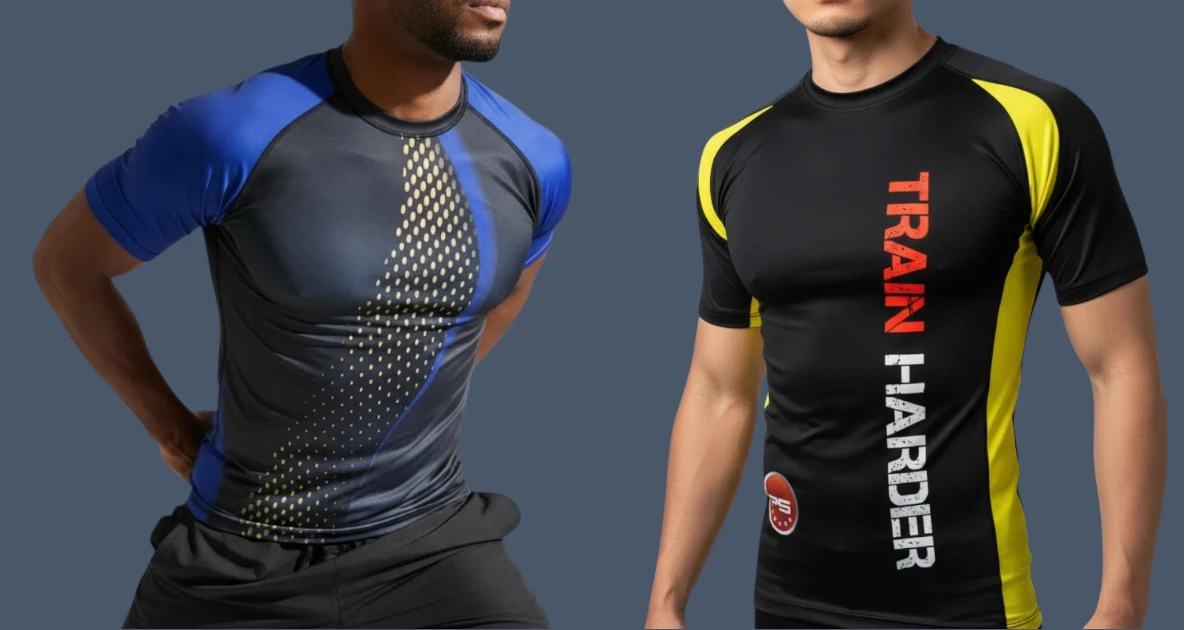
When you put on Pacific Sports compression wear, the spandex content is what’s responsible for several things you’ll notice immediately: The garment feels like a second skin rather than clothing sitting on top of skin. It doesn’t bunch, shift, or ride up during training because the elasticity keeps it tracking with your body rather than sliding against it. It holds its shape wash after wash. Polyester resists shrinking; spandex resists stretching out. Together they make a garment that looks and fits the same after a hundred washes as it did on the first wear — provided you wash cold and avoid fabric softener, which degrades the spandex elasticity over time. It doesn’t wrinkle. The elasticity means the fabric springs back to its original form after washing and drying — no ironing needed, straight from the clothesline and ready to train.
A note on fabric softener
Fabric softener and spandex don’t mix well. Fabric softener works by coating the individual fibres of a fabric — and that coating gradually breaks down the elasticity of spandex with repeated use. Compression wear washed regularly with fabric softener loses its stretch and shape retention faster than it should. Wash in cold water with a small amount of mild detergent and skip the fabric softener entirely. Your compression wear will last significantly longer.
Specifications
- Fabric: 85% polyester, 15% spandex (Lycra/elastane)
- Stretch: 4-way
- Compression level: Mild to moderate
- Not see-through when stretched
- Flatlock seam construction — no raised edges to chafe
- Sublimated design — won’t fade or peel
- Wrinkle resistant — no ironing required
- Suitable for: Wear as training attire or under gi, shorts, or pants
- Sizes: S, M, L, XL — see size chart on product page
- Care: Machine wash cold, no fabric softener, air dry
Frequently Asked Questions
Is elastane the same as Lycra and spandex?
Yes. Elastane, Lycra, spandex, Numa, Spandelle, and Vyrene are all names for the same polyurethane-based synthetic fibre developed by DuPont in the 1950s. Lycra is a brand name; spandex and elastane are the most common generic names. When you see any of these on a garment label, they refer to the same material.
Why is the blend 85% polyester and 15% spandex rather than a different ratio?
The 85/15 ratio is the industry standard for sports compression wear because it delivers the right balance of properties. More spandex would make the garment too elastic and reduce moisture management; less would reduce the stretch and shape retention that makes compression wear useful. At 85/15, the polyester provides structure, durability, and moisture wicking, while the spandex provides the four-way stretch and shape recovery that defines compression wear.
Does spandex content affect how compression wear feels on the skin?
Yes. The spandex is what gives compression wear its characteristic second-skin feel — smooth, close-fitting, and non-restrictive. Without it, the same polyester fabric would feel like a fitted t-shirt rather than compression wear. The spandex also prevents the fabric from bunching or shifting during training, which is why compression wear stays in place through kicks, rolls, and direction changes in a way that regular athletic wear doesn’t.
Will spandex compression wear shrink in the wash?
Not significantly, if washed correctly. Polyester resists shrinking and spandex resists stretching out permanently — together they make a dimensionally stable fabric. The main risk is washing in hot water, which can affect the spandex elasticity over time. Always wash cold. The fabric is already wrinkle-resistant, so cold washing and air drying is all that’s needed to keep it in good condition.
Can spandex compression wear be ironed?
It doesn’t need to be — the fabric is wrinkle-resistant by nature and springs back to its original form after drying. If you feel the need to iron it, use the lowest heat setting only, as high heat can damage the spandex fibres. In practice, compression wear taken straight from the clothesline is ready to wear without any ironing.
How long should compression wear last?
With proper care — cold washing, no fabric softener, air drying — a quality spandex-polyester compression garment should last several years of regular training. The main signs of wear to watch for are loss of elasticity (the garment no longer bounces back to its original shape after wearing) and pilling or surface degradation of the polyester. Both happen much faster with hot washing, tumble drying, or regular use of fabric softener.