Kicking Shields and Focus Pads for Muay Thai Combos
Training With Kicking Shields, Focus Pads, and Paddles: A Complete Striking Guide
Kicking shields, focus pads, and paddles are three different tools that serve three overlapping purposes. Understanding what each one does well — and how to combine them in a session — gives you a far more complete striking training setup than using any single tool alone. This guide covers the basics of each, the kicks and combos you can practice with them, and how to structure sessions that develop accuracy, range, timing, and power simultaneously.
The three tools and what they do best
Kicking shields (multipurpose pads)
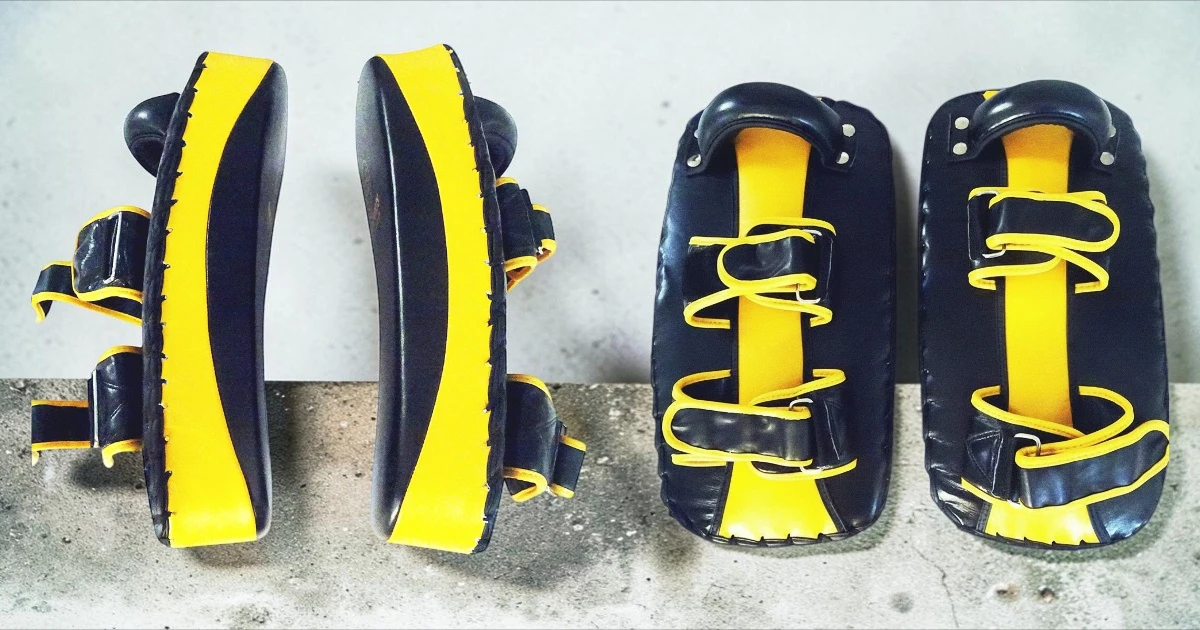
Kicking shields are large, heavily padded targets held by a partner. Their size and three layers of high-density foam make them the right tool for full-power kicks — front kicks, roundhouse kicks, side kicks, knee strikes, and elbow strikes. The large surface area (56cm x 40cm x 11cm) means your partner can absorb maximum force without injury, which lets you train at full intensity. They’re the power development tool in your striking kit. If you’re unsure which size and weight to choose, see our guide to choosing a kicking shield.
Focus pads
Focus pads are smaller, lighter targets — held in each hand by your partner rather than strapped to the forearm. They’re designed primarily for punch combinations and for head-height targeting where a kicking shield would be impractical to hold. Their mobility is their main advantage: a partner with focus pads can move them quickly between positions, call combinations, and even throw return strikes to develop your defensive reflexes. They’re the precision and combination tool. For a breakdown of drills and holder technique, see our focus mitt drills guide.
Paddles
Paddles — available as single or double — are the smallest and lightest of the three. The 22cm x 22cm target area is specifically designed for accuracy and timing work rather than power. The firm foam centre lets you feel the impact of each kick, which gives you proprioceptive feedback about your technique that a softer target doesn’t provide. The handle design allows the paddle to be held away from the holder’s body, which is important for spinning and hook kicks where the kick travels in an arc past the holder. Paddles are the accuracy and timing tool.
Kicks to practice with shields and paddles
Front kick
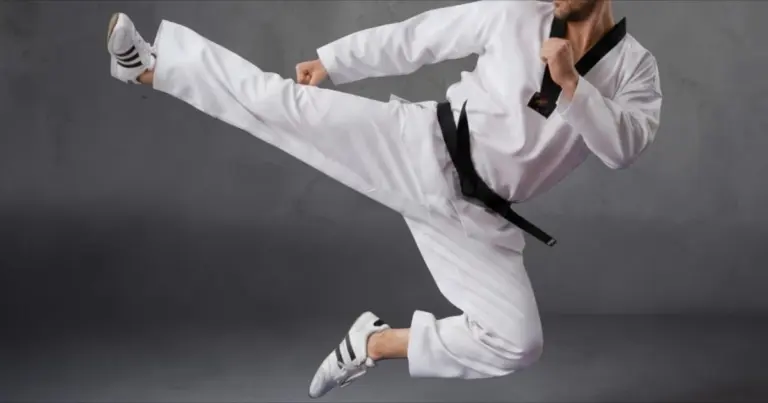
Raise your knee and snap your leg forward, striking with the ball of your foot for a penetrating kick, or with the sole of your foot for a pushing teep. The kicking shield is ideal for full-power front kicks at low, mid, and high sections. Practice at all three heights — each requires different hip positioning and balance. The paddle works well for front kick accuracy once the technique is established.
Roundhouse kick
Pivot on the ball of your supporting foot, rotate your hip, and swing your leg in a circular arc. The power comes from the hip rotation, not the leg. Strike with your shin for Muay Thai style, or with the instep for Taekwondo and Karate. The kicking shield handles high and mid-section roundhouse kicks well — your partner angles the shield to match the circular trajectory. Paddles develop the accuracy of the targeting once the technique is solid.
Side kick
Chamber your knee toward your chest, then extend your leg sideways, striking with the foot blade or heel. At full extension, your hip, knee, and ankle should form a straight line. The kicking shield absorbs the direct linear force of a side kick well. Practice at low, mid, and high sections, focusing on alignment and balance throughout.
Spinning kicks
Spinning back kicks, spinning hook kicks, and multiple spinning combinations can all be practiced with paddles and kicking shields. The paddle’s ability to be held away from the holder’s body makes it particularly useful for spinning hook kicks where the heel travels in an arc — the holder can position the paddle clear of their body so the kick can complete its full rotation. Start slow, feel the rotation, then increase speed and power progressively.
Sector kicks
This is a training concept worth building into your sessions deliberately. Every kick can be sectored by height — low (knee to hip), mid (hip to shoulder), high (shoulder to head) — and by direction — front, side, back, diagonal. Your partner can hold the shield or paddle at specific sectors without telling you in advance, forcing you to read the target position and select the appropriate kick. Start by focusing on range and accuracy at each sector before adding power. This develops the spatial awareness and target recognition that makes kicking effective in sparring and competition.
Muay Thai combinations with kicking shields and focus pads
The most effective pad sessions use kicking shields and focus pads simultaneously — your partner holds a kicking shield in one hand for kick and knee targets, and a focus pad in the other for punch and elbow targets. This replicates the mixed technique demands of Muay Thai more accurately than using one tool alone. Pacific Sports kicking shields and focus pads are both lightweight enough for a partner to hold one of each comfortably throughout a session. For step-by-step combo work using this exact setup, see our kicking shield technique and combos guide.
Here are eight Muay Thai combinations worth drilling. For each, your partner should know the combination in advance so they can position the shield and pad at the right height and angle.
Jab + Cross. Lead hand jab to the focus pad, immediately followed by a cross from the rear hand. Target upper body or face height. This is the foundation combination — practice it until it’s automatic before adding more strikes.
Jab + Cross + Hook. Add a hook from the lead hand after the cross. Your partner moves the focus pad to the appropriate angle for each strike. This three-strike combination develops rhythm and hand speed.
Teep + Cross kick + Hook. Push with a powerful teep kick to the kicking shield with your lead leg. Follow immediately with a cross kick to the shield with your rear leg. Finish with a hook punch to the focus pad at face level. This combination mixes kicking and punching and requires your partner to quickly switch which tool they present after the kicks.
Hook + Cross + Elbow. Lead hook to the face, cross to the body, then close the distance and deliver an elbow strike to the focus pad at nose height. The elbow is a close-range weapon — this combination teaches you to transition from medium range to close range and finish with the elbow, which is one of Muay Thai’s most distinctive weapons.
Parry + Hook + Cross + Clinch + Knees. Your partner throws a light punch with the hand holding the focus pad. You parry it, move in, deliver a hook and cross to the pads, then initiate a clinch and deliver multiple knee strikes to the kicking shield. This combination develops the parry-and-counter reflex and practices the transition from striking to the Muay Thai clinch.
Teep + Knee + Switch kick + Cross kick. Lead leg teep to push your partner back, immediately move in and deliver a rear leg knee strike to the shield, switch your stance and deliver a switch kick, then finish with a cross kick to the head. This combination develops fast transitions between techniques and requires precise footwork to execute cleanly.
Fake low kick + Hook + Cross + Low kick + Knee + Elbow. Fake a low kick to the legs to provoke a reaction, then move in and deliver a hook and cross to the pads. In close range, land a low kick to the shield, drive a knee to the chest, and finish with an elbow to the jaw. This combination introduces feinting — a fundamental tactical element that makes your striking unpredictable.
Jab + Hook + Knee + Clinch + Sweep. Lead hand jab, rear hand hook, move in for a knee strike, initiate a clinch, then sweep your partner’s leg for a takedown. This combination bridges striking and grappling — particularly relevant for MMA practitioners incorporating Muay Thai techniques.
Using paddles for accuracy development
After drilling combinations on shields and pads, finish sessions with paddle work focused specifically on accuracy and timing. The smaller target demands more precise placement — if your roundhouse is landing with the shin rather than the instep, or your front kick is hitting the edge of the paddle rather than the centre, the paddle tells you immediately.
Your partner can develop paddle sessions progressively:
Start with a stationary paddle at a fixed height so you can establish correct technique and centre-of-target contact. Move to a stationary paddle that changes height and angle between kicks, requiring you to read the new position and select the appropriate kick. Progress to a moving paddle where your partner walks and repositions continuously, requiring you to track the target and time your kicks to a moving object. The moving paddle is the most demanding accuracy drill and the closest simulation to actual sparring target acquisition.
Structuring a session
A practical session structure that uses all three tools effectively:
Warm up with shadow kicking — no target, full technique, both sides equally. Move to kicking shield work for individual kicks at full power. Progress to combination drills using shield and focus pad together. Finish with paddle accuracy work at lower intensity, focusing on precision rather than power.
Always practice both sides. Most practitioners have a dominant kicking side and neglect the other. Every drill in this guide should be done on both legs and both hands equally — imbalanced kicking development is one of the most common technical weaknesses in striking martial arts.
Care and maintenance
Wipe down shields, pads, and paddles with a damp cloth after every session — including handles, straps, and loops, not just the striking surface. Sweat and bacteria accumulate on every surface. Air dry fully before storing. Don’t seal equipment in a bag while still damp — trapped moisture degrades the leather and foam faster and develops odour. Pacific Sports training equipment is built for heavy use, but basic cleaning after each session extends the life significantly.
Frequently Asked Questions
What’s the difference between a kicking shield and a focus pad?
Kicking shields are large, heavily padded targets for full-power kicks, knee strikes, and elbow strikes — designed to absorb maximum impact. Focus pads are smaller, lighter, and held in the hands — designed for punch combinations and head-height targeting where mobility and quick repositioning matter more than impact absorption. Both are useful; they serve different purposes in the same session.
Can one partner hold a kicking shield and a focus pad simultaneously?
Yes, and it’s how Muay Thai combination training works best. The kicking shield is held in one hand for kick and knee targets; the focus pad is held in the other for punch and elbow targets. Both Pacific Sports kicking shields and focus pads are lightweight enough for this — the shield weighs approximately 900g, and the pads are similarly light. Your partner can move both tools independently to present targets for different techniques within the same combination.
What are paddles best for compared to kicking shields?
Paddles are for accuracy and timing; kicking shields are for power. The smaller 22cm x 22cm target area of the paddle demands more precise kick placement than the large shield surface. The firm foam centre provides feedback about kick impact that a softer target doesn’t. Use shields for power development and conditioning; use paddles for technique refinement and accuracy drilling.
Should I practice kicks at full power on paddles?
For power kicks, use the kicking shield — it’s built for that load. Paddles are designed for accuracy and timing work at controlled intensity. High-power kicks on paddles put unnecessary stress on the holder’s wrist and hand. Once your technique is established and accurate on paddles, transfer the power development to the kicking shield where the padding and holder protection are designed for it.
How do I know if my kicks are improving?
Use multiple indicators. On the paddle, track whether you’re consistently hitting the centre of the 22cm target or landing off to the edges. On the kicking shield, get verbal feedback from your holder about power — they feel the difference between a kick that drives through and one that lands flat. Count kicks in a timed period for speed tracking. Your holder’s real-time feedback is the most valuable performance indicator in pad and shield training.
How often should I train with shields and pads?
Two to three sessions per week of focused pad and shield work is sufficient for most practitioners when combined with other training. More than that without adequate recovery accumulates fatigue in the kicking muscles — particularly the hip flexors and supporting leg. If your kicks are getting sloppier through a session rather than sharper, stop and recover rather than continuing with poor technique.