Does the colour of a uniform affect sports performance?
Does the Colour of Your Uniform Affect Your Performance in Sport?
It sounds like the kind of question that belongs in a pub debate rather than a research laboratory. But sports scientists have actually studied this question seriously — with real data from Olympic competitions — and the results are genuinely interesting, even if they don’t give a clean answer.
Understanding how uniform colour affects sports performance martial arts can provide valuable insights for athletes.
The red uniform advantage — or is there one?
This research into uniform colour and sports performance martial arts indicates that the colour of your uniform may impact your psychological state and performance.
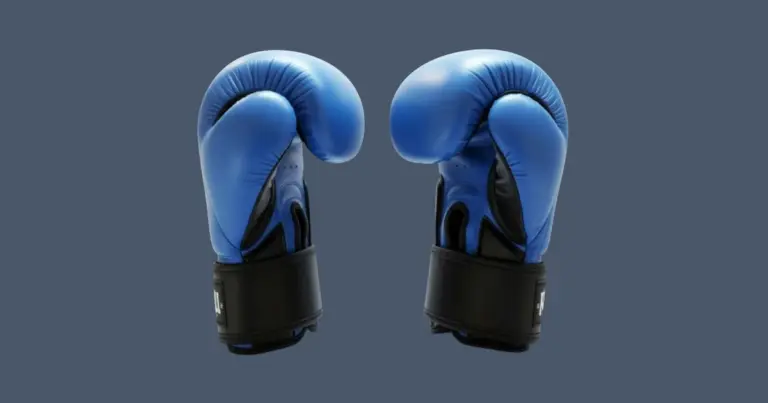
The study that started most of the conversation was published in Nature in 2005 by Russell Hill and Robert Barton from the University of Durham. They looked at four combat sports at the 2004 Athens Olympics — boxing, Taekwondo, Greco-Roman wrestling, and freestyle wrestling. In all four sports, competitors were randomly assigned either a red or blue uniform. Hill and Barton found that contestants wearing red won more fights than contestants wearing blue. Their explanation drew on animal behaviour research — in many species, the colour red is associated with dominance and testosterone-driven signalling. Their argument was that this association might carry over into human competition, giving red-uniformed athletes a psychological edge either through increased confidence in themselves or increased intimidation of opponents. It’s a compelling finding. But it’s not the whole story.
Blue beats white in Judo — but maybe not for the reason you think
Ultimately, the subject of uniform colour and its impact on sports performance martial arts requires ongoing research and discussion.
Also from the Athens 2004 Olympics, Candy Rowe, Julie Harris, and Craig Roberts published a study in the same journal looking at Judo matches where one competitor wore blue and the other wore white. They found that blue-uniformed players won more matches than white-uniformed players. Their proposed explanation was visual rather than psychological. White judogi create a high contrast against most mat and arena backgrounds, making the white-clad athlete’s movements easier to track and anticipate. Blue provides less contrast, making it slightly harder for the opponent to read the athlete’s movement patterns in real time. In a sport where reading your opponent’s movements a fraction of a second earlier can determine who gets thrown, this visual advantage could be meaningful. This is a different mechanism to the red dominance argument — one is about psychology, the other is about visual perception.
In the realm of uniform colour, the debate on its effect on sports performance martial arts continues to evolve.
A much larger dataset says: maybe not
These findings challenge the assumption that uniform colour is irrelevant to sports performance martial arts.
Peter Dijkstra, Paul Preenen, and Hans van Essen weren’t satisfied with conclusions drawn from a single Olympic tournament. In 2018 they published an analysis of 45,874 judo contests from all international judo tournaments between 2008 and 2014 — a dataset large enough to detect even small effects reliably. Their conclusion: blue uniform colour does not bias winning in judo. The effect found in the 2004 Athens data didn’t hold up across a decade of international competition. They suggested that the blue-white pairing used in international judo actually provides a reasonably level playing field — neither colour confers a meaningful advantage. 45,000 contests is a hard dataset to argue with.
It’s essential to consider how uniform colour impacts sports performance martial arts for both individual and team competitors.
Ultimately, the implications of uniform colour on sports performance martial arts merit further investigation.
Red doesn’t help in women’s basketball either
Hence, understanding the relationship between uniform colour and sports performance martial arts can aid in better training methodologies.
In conclusion, further studies should focus on uniform colour’s significant role in sports performance martial arts.
Nadav Goldschmied and Carson Spitznagel tested the red advantage hypothesis in a different context — women’s American collegiate basketball across eight NCAA tournament seasons from 2012 to 2019. Their conclusion: red uniforms had no superiority effect. Uniform colour didn’t influence which teams won. This matters because the Hill and Barton study drew its conclusions from individual combat sports where random uniform assignment was used. Team sports with established team identities introduce different variables — home advantage, crowd support, team cohesion — that may swamp any uniform colour effect that exists in individual combat sports.
Understanding uniform colour in competitions can enhance sports performance martial arts knowledge.
The exploration of uniform colour’s effect on sports performance martial arts can guide future athletes in their training.
Thus, the implications of uniform colour on sports performance martial arts can influence rules and standards in competitions.
Why uniform colour is still used strategically
The ongoing discussion about uniform colour as it relates to sports performance martial arts is essential for athletes and coaches alike.
Even without conclusive evidence that colour affects performance, uniform colour clearly matters for other reasons. In team sports, colour distinguishes friend from foe — for players, referees, and spectators. In an era of high-definition broadcasting and multiple simultaneous camera angles, the visual clarity of uniform colours affects how the sport is experienced by millions of viewers who never set foot in the venue. Broadcasters have preferences, and governing bodies listen to them. Individual belief also plays a role that’s difficult to measure scientifically. Tiger Woods famously wore red on the final round of tournaments throughout his career — not because a study told him to, but because it was a personal ritual that contributed to his competitive mindset. Whether the colour itself did anything is almost beside the point — the ritual had meaning to him, and meaning affects performance.
Recognizing the significance of uniform colour in sports performance martial arts can lead to improved strategies.
In summary, uniform colour’s influence on sports performance martial arts is an important aspect to consider for competitors at all levels.
This strategic approach can enhance the understanding of uniform colour’s impact on sports performance martial arts.
What does this mean for martial arts?
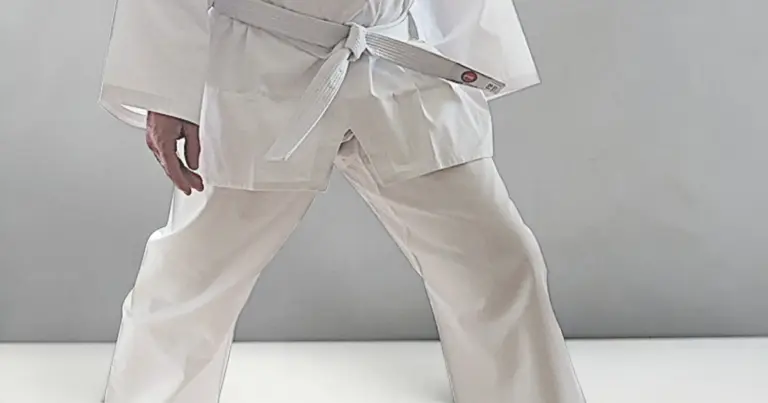
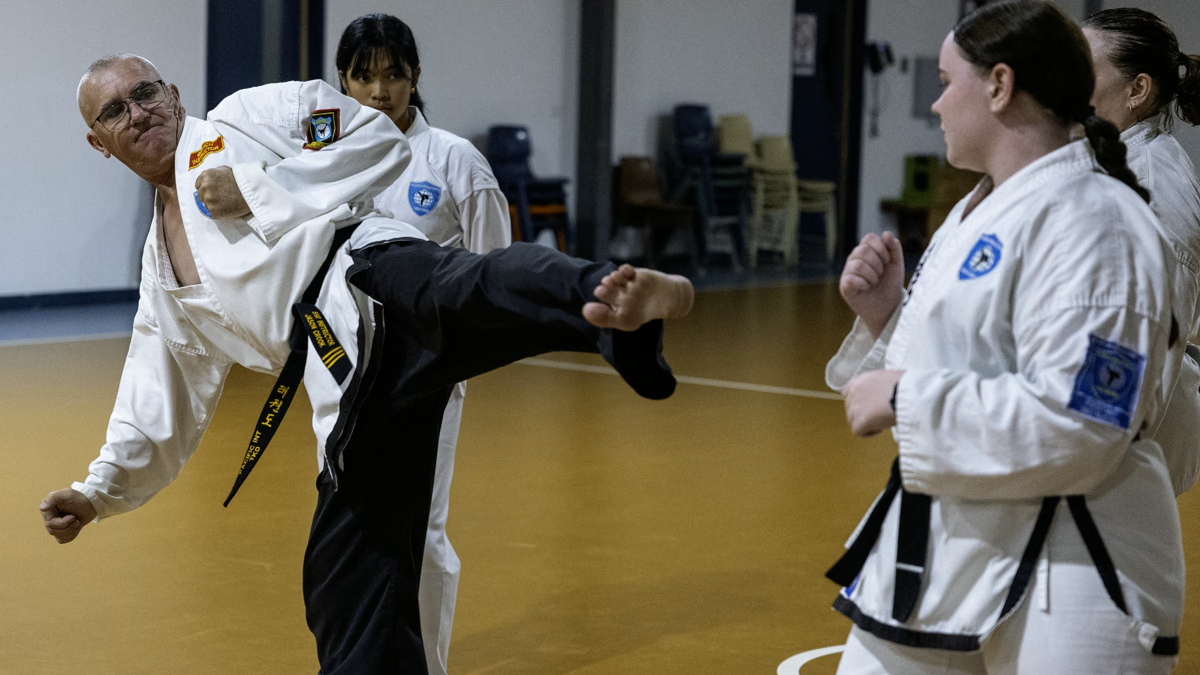
Honestly, probably not much for most practitioners. At club training level, your gi colour is determined by your school’s rules and your organisation’s requirements — white for most, blue or black in some contexts. You don’t get to choose. At competition level, the research suggests you shouldn’t spend mental energy worrying about whether your assigned uniform colour will affect your performance. The Dijkstra dataset of 45,000 judo contests is the most methodologically robust study available, and it found no meaningful colour advantage. Skill, preparation, and competition experience are the variables that determine outcomes — not whether your gi is white or blue. What the research does suggest is that visual contrast might matter in specific contexts — particularly in sports where reading an opponent’s body movement quickly is critical. If you train in a white gi and compete in a blue one, or vice versa, there may be a brief adaptation period where your opponent’s movement patterns look slightly different to what you’re used to. Training occasionally in different coloured environments — or at least being aware of this possibility — is more useful preparation than worrying about the colour itself.
Future research on uniform colour and its connection to sports performance martial arts might yield valuable insights for practitioners.
The honest conclusion
In training scenarios, the influence of uniform colour on sports performance martial arts remains a point of inquiry.
The research on uniform colour and athletic performance is genuinely interesting, actively contested, and not yet conclusive. Some studies find effects; larger and more rigorous studies often fail to replicate them. The most reasonable current position is that any uniform colour effect that exists is small, context-dependent, and likely overwhelmed by the skill and preparation differences between competitors. Train hard, choose your gi colour according to your school’s requirements and your personal preference, and leave the sports psychology debates to the researchers.
Frequently Asked Questions
Why do Judo competitions use blue and white gi rather than two white gi?
The IJF (International Judo Federation) introduced the blue judogi for international competition specifically to help referees, spectators, and broadcasters distinguish between competitors more easily during fast exchanges and ground fighting. The blue-white pairing provides clear visual contrast regardless of mat colour or arena lighting. The Dijkstra research suggests this pairing doesn’t advantage either competitor — which was presumably the intention.
Does wearing red make you more aggressive or dominant?
The research on this is mixed. The Hill and Barton study suggested a correlation between red uniforms and winning in Olympic combat sports, but subsequent research hasn’t consistently supported a causal mechanism. Whether red makes the wearer feel more dominant, makes opponents perceive the wearer as more dominant, or whether the 2004 Olympic result was a statistical anomaly in a small dataset remains genuinely unclear.
Should I choose a black gi over white if I want a psychological advantage?
There’s no reliable research evidence to support this choice. Some research has suggested black uniforms may be associated with increased perceived aggression by opponents, but the effect sizes in these studies are small and the evidence isn’t consistent. Choose your gi colour based on your school’s requirements, your organisation’s competition rules, and your personal preference. See our full guide on gi colour rules by discipline for what’s actually required in different contexts.
Do professional martial artists choose their uniform colours strategically?
In most organised martial arts competition, uniform colour is either assigned randomly or specified by the rules — competitors don’t choose. In sports where there is choice, some athletes develop colour preferences as part of their pre-competition ritual, similar to Tiger Woods and red on Sundays. Whether the colour itself matters or whether the ritual matters is a question the research hasn’t definitively answered.
Has any research been done specifically on Taekwondo uniform colour?
The Hill and Barton 2005 study included Taekwondo in its dataset from the Athens Olympics and found that red-uniformed Taekwondo competitors won more matches than blue-uniformed competitors. However, this was part of a small dataset from a single tournament, and the finding hasn’t been tested in a large-scale Taekwondo-specific study comparable to the Dijkstra judo research. The World Taekwondo federation uses electronic scoring protectors that are colour-coded for scoring purposes, which introduces different variables to the uniform colour question.
Does this research apply to training, or only competition?
The studies discussed here all looked at competition outcomes — they’re not directly applicable to training environments. In training, uniform colour has no meaningful effect on performance. Any psychological associations with colour are most likely to manifest under the specific pressure of competition, not during regular club sessions.