Which colour gi (martial arts uniform) should be worn?
What Colour Gi Should You Wear? A Guide by Discipline
Walk into almost any traditional dojo and you’ll see white. It’s been the default gi colour for over a century and remains the most widely worn across Karate, Taekwondo, Judo, and BJJ. But coloured gi are increasingly common — black, blue, and even red-trimmed options are all available. Whether you can wear them depends entirely on your discipline, your organisation, and your instructor.
Here’s a practical breakdown by martial art, so you know what’s appropriate before you buy.
Why white became the standard
White wasn’t an arbitrary choice. When Jigoro Kano developed Judo in the late 19th century and Gichin Funakoshi brought Karate to Japan in the early 20th century, white was the colour of traditional Japanese training garments. It represented purity and a beginner’s mind — the idea that you enter training free of ego and preconceptions, ready to learn. That symbolism carried through into Taekwondo, BJJ, and most other gi-based arts as they developed.
Practically speaking, white also shows dirt clearly, which was historically seen as an incentive to wash your gi regularly. A white gi that’s grey or yellowed tells everyone around you something about your hygiene habits.
Gi colours by discipline
Karate
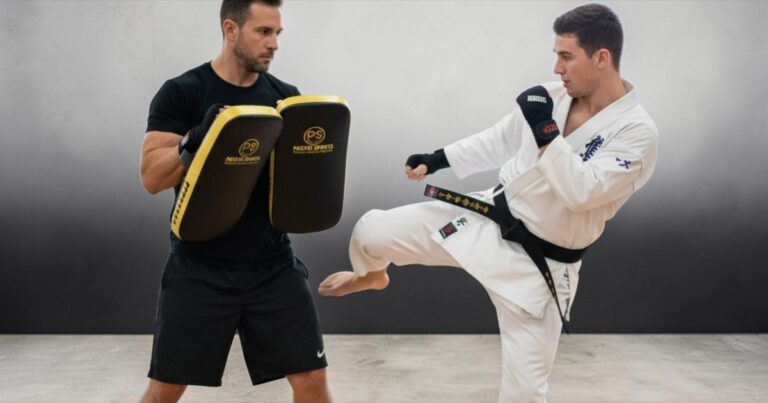
White is the overwhelming standard in Karate. Most traditional styles — Shotokan, Goju-ryu, Wado-ryu, Kyokushin — require white for both training and competition. Instructors in some schools wear black gi to distinguish themselves from students, but this varies by organisation and is far from universal. If you’re training Karate and your instructor hasn’t told you otherwise, buy white.
The World Karate Federation (WKF) requires white gi for competition. If you’re training with competition goals, white is not optional.
Taekwondo
Taekwondo gi colour rules depend significantly on which organisation you train under.
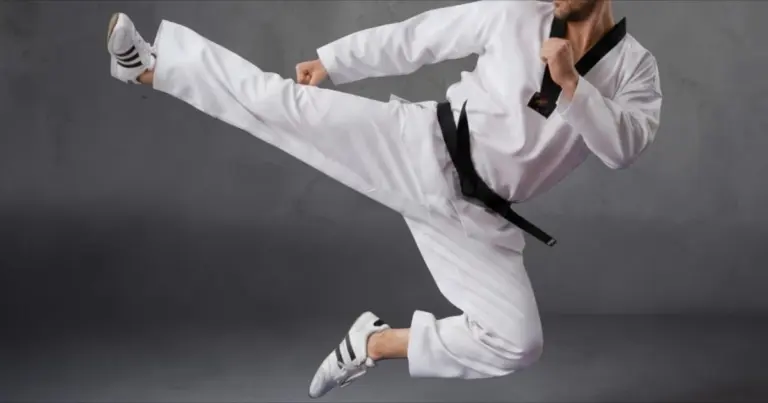
Under the World Taekwondo (WT) federation — the Olympic governing body — white is standard for both training and competition. The dobok is a V-neck style, and any coloured trim or piping is typically restricted to rank or club insignia.
Under the International Taekwondo Federation (ITF), white is also the default but black trim on collars and cuffs is common, and black gi are sometimes worn by higher-ranking practitioners and instructors.
Some schools use coloured gi for specific purposes — coloured panels to indicate club membership, or instructor gi in a different colour altogether. Always check with your school before buying anything other than white.
Judo
Judo has traditionally been strict about white gi, but blue was introduced at the international competition level to help spectators and judges distinguish between the two competitors during a match — one wears white, one wears blue. This is now standard at IJF (International Judo Federation) competitions.
For regular club training, white remains the norm. Blue gi are generally accepted at most clubs but check with your instructor first. Other colours are typically not permitted in competition and are uncommon in training.
BJJ
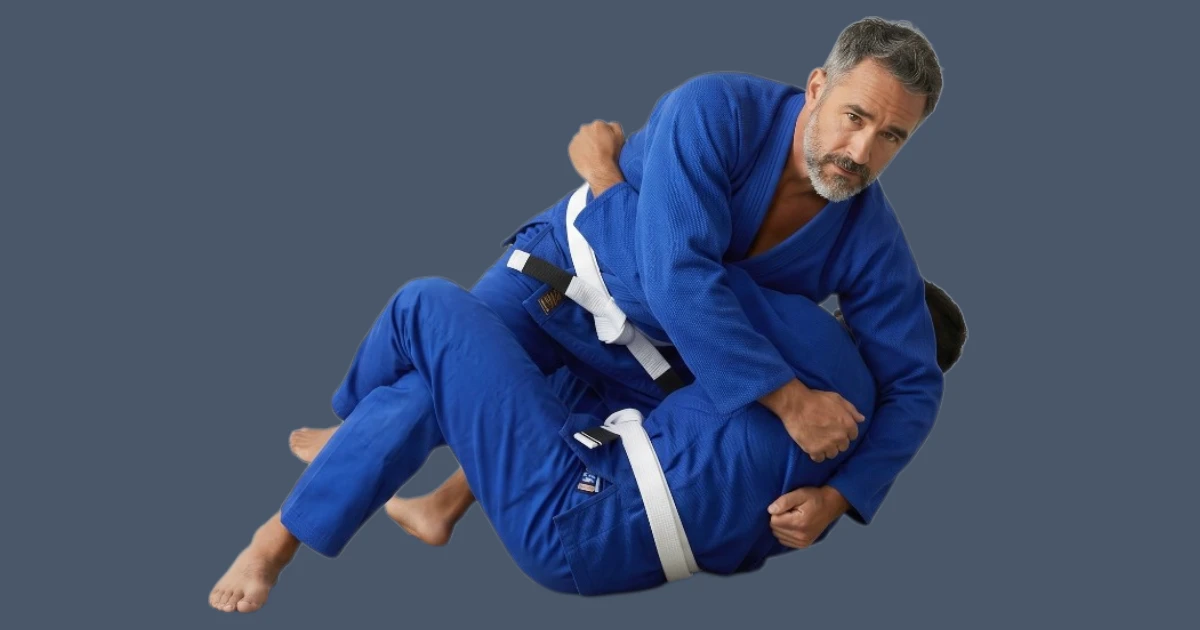
BJJ has the most relaxed gi colour rules of any traditional gi-based art. White, blue, and black are all widely accepted and you’ll see all three at most academies. Some academies also permit other colours for training, though competition rules are stricter.
The IBJJF (International Brazilian Jiu-Jitsu Federation), which governs most major BJJ competitions, permits white, blue, and black gi only. No other colours are permitted at IBJJF events. If you’re training BJJ competitively under IBJJF rules, stick to those three colours.
For casual training, most BJJ academies are relaxed — your instructor will tell you if there’s a house rule about colours.
Jiu-Jitsu (traditional)
Traditional Jiu-Jitsu follows similar conventions to Judo — white is standard, with some organisations permitting blue. Coloured gi are generally reserved for instructors or special occasions. Check with your specific organisation’s rules.
What black gi actually means
Black gi carry different significance depending on the art. In some Karate schools, a black gi indicates an instructor or senior black belt. In BJJ, black gi are worn by practitioners at all levels — there’s no rank significance attached to the colour of the gi itself, only to the belt. In Taekwondo, black trim is common on ITF-style dobok but a fully black gi is less standard.
The key point is that the meaning of a black gi is entirely context-dependent. Don’t assume it carries rank significance in your art just because it does in another one.
Coloured trim vs coloured gi
There’s a practical distinction worth making here. Many practitioners wear a white gi with coloured trim — red piping, pink accent panels, or coloured embroidery. This is generally more widely accepted than a fully coloured gi, and is common for women’s gi and youth gi where a touch of colour is welcome without departing from the white base.
Pacific Sports offers women’s BJJ gi with hot pink trim and BJJ gi with red trim — both on a standard gi base that meets most competition requirements while offering something beyond plain white.
A practical note on washing
White gi show sweat stains, yellowing, and mat transfer more visibly than coloured gi. This is actually useful — it tells you when the gi needs washing and when it’s time to replace it. Coloured gi, particularly black, hide dirt more effectively, which can lead to less frequent washing if you’re not disciplined about it. Wash every gi after every session regardless of colour — the hygiene reasons don’t change based on what you can see.
One thing to watch with coloured gi: wash separately from white gi, particularly when new. Coloured gi — especially darker ones — can bleed in the first few washes and will stain a white gi permanently if washed together.
The simple answer
If you’re just starting out and unsure what to buy — get white. It’s accepted everywhere, meets all competition requirements, and is appropriate for every discipline. Once you know your school’s culture and your organisation’s rules, you can make a more specific choice. But white is never wrong.
Frequently Asked Questions
Can I wear any colour gi I want to training?
That depends entirely on your school. Some academies — particularly BJJ gyms — are relaxed about colour. Traditional Karate and Taekwondo dojos tend to be strict about white. Always ask your instructor before buying a coloured gi. Turning up to a traditional Karate dojo in a black gi without checking first is the kind of thing that makes a bad first impression.
Does gi colour indicate rank?
In most arts, no — rank is indicated by the belt, not the gi. There are exceptions: some Karate schools use black gi to distinguish instructors, and some organisations use coloured gi for specific grades. But this varies so much between schools and organisations that you should never assume gi colour carries rank significance without confirming it with your instructor.
Are coloured gi allowed in competition?
It depends on the competition. Most traditional Karate and Taekwondo competitions require white. Judo competitions at IJF level require one competitor in white and one in blue. IBJJF BJJ competitions permit white, blue, and black only. If you’re competing, check the specific rules for your event before buying a gi.
Can I wear a white jacket with black pants?
Some schools allow this combination for training — it’s particularly common when one piece has worn out and needs replacing before the other. For grading and competition, you’ll almost always need a fully matching set. Check with your instructor first. If you only need to replace one piece, Pacific Sports sells gi jackets and pants separately so you don’t need to buy a complete new gi.
Do women need a different coloured gi?
No — the colour conventions are the same for men and women. Women’s gi are cut differently to fit female body proportions, but the colour rules are identical. Many women choose gi with coloured trim for personal preference, which is widely accepted at most clubs as long as the base colour meets the school’s requirements.
Will a coloured gi fade over time?
Yes, particularly darker colours like black and navy blue. Washing in cold water rather than hot slows fading significantly. Avoid drying coloured gi in direct sunlight for extended periods — UV exposure fades dyed fabric faster than washing does. A coloured gi that’s washed cold and dried in shade will hold its colour far longer than one that goes through hot cycles and full sun drying regularly.
Understanding Gi Colour Rules in Martial Arts
Each martial art has its own specific gi colour rules martial arts practitioners should be aware of to ensure they adhere to traditions and regulations.