Are rash guards and compression wear the same?
Rash guards vs Compression Wear Martial Arts: What’s the Difference?
If you’ve looked at both side by side, they seem almost identical. Both fit tight to the body, both are made from polyester-spandex blends, and both get worn under a gi or as standalone training gear. The differences are real but minor — and understanding them helps you choose the right one for how you actually train.
Comparing Rash Guard vs Compression Wear in Martial Arts
Rash Guard vs Compression Wear Martial Arts: Which is Right for You?
Understanding Rash Guard vs Compression Wear in Martial Arts
For optimal performance, consider how the rash guard vs compression wear martial arts will impact your training efficiency.
When it comes to training in martial arts, understanding the nuances between rash guards and compression wear can significantly enhance your performance and comfort. A rash guard offers greater durability and protection against abrasions, while compression wear excels in muscle support and moisture management. Choosing between them depends on the specific requirements of your training style and preferences.
Understanding the differences between rash guard vs compression wear martial arts is crucial for every athlete. This knowledge can help you better prepare for your training sessions.
Where they came from
As you explore the options of rash guard vs compression wear martial arts, you’ll notice how each is specifically tailored to different training needs.
Rash guards were originally Designed for surfers. The name tells you everything — they were built to prevent skin rashes from contact with wetsuits, saltwater, sand, and sun. That skin-protection purpose is still the core of what a rash guard does, even though they’ve long since moved into martial arts, particularly BJJ and MMA.
Compression wear has a different origin. It started in medicine, where controlled compression of specific body areas was used to improve circulation and manage conditions like lymphoedema and deep vein thrombosis. Sports compression wear is a significantly lower-pressure version of that same principle, adapted for athletic use. The muscle support and blood flow benefits come directly from that medical background.
Both have evolved well beyond their origins, but knowing where they came from explains why they’re built slightly differently.
The actual differences
Fabric thickness
Rash guard fabric is slightly thicker than compression wear fabric. This makes rash guards marginally more durable and better at resisting abrasion — which matters when you’re spending rounds on a mat. The trade-off is that compression wear, being thinner, wicks sweat away from the skin slightly more efficiently. In a hot gym without air conditioning, that difference is noticeable.
Stitching
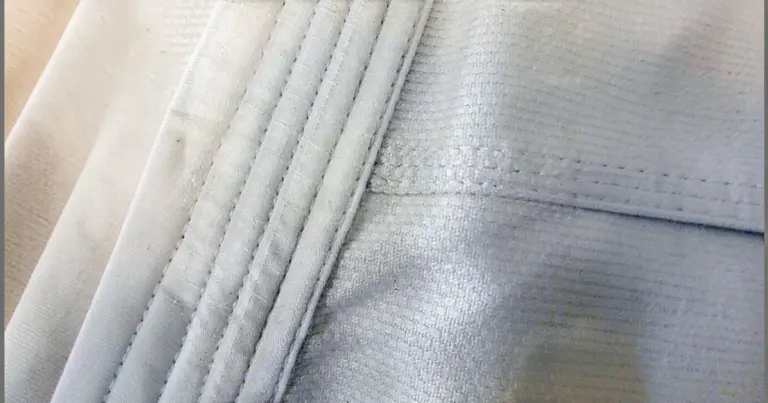
Pacific Sports rash guards use reinforced flatlock stitching — the seams are overlapped and stitched flat so there are no raised edges to chafe against skin or catch on a training partner’s gi. Compression wear uses standard flatlock stitching, which is still comfortable and durable, but not quite as robust under the repeated friction of grappling. For striking-focused training, the difference is negligible. For heavy groundwork, rash guard stitching holds up better over time.
The rubber hem grip
Rash guards have a thin rubber grip on the bottom hem that prevents the top from riding up during training. If you’ve ever had a compression top bunch up under your gi jacket during a roll, you’ll appreciate why this detail matters. Compression wear doesn’t have this grip — the longer cut helps prevent ride-up, but the rubber grip on rash guards is more reliable.
In environments where grappling is prevalent, the choice between rash guard vs compression wear martial arts becomes even more significant.
Design and colour
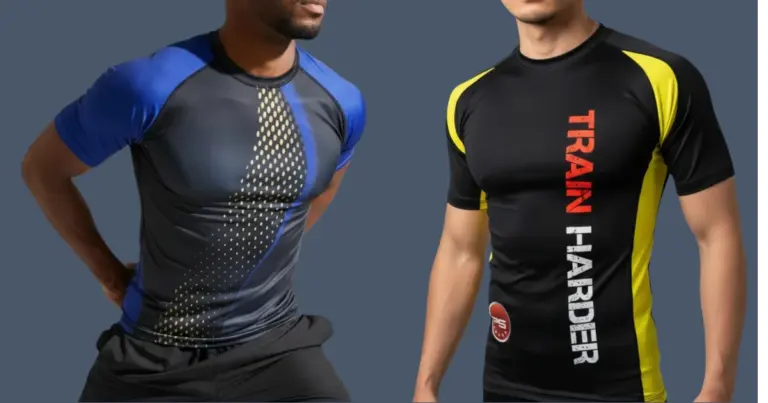
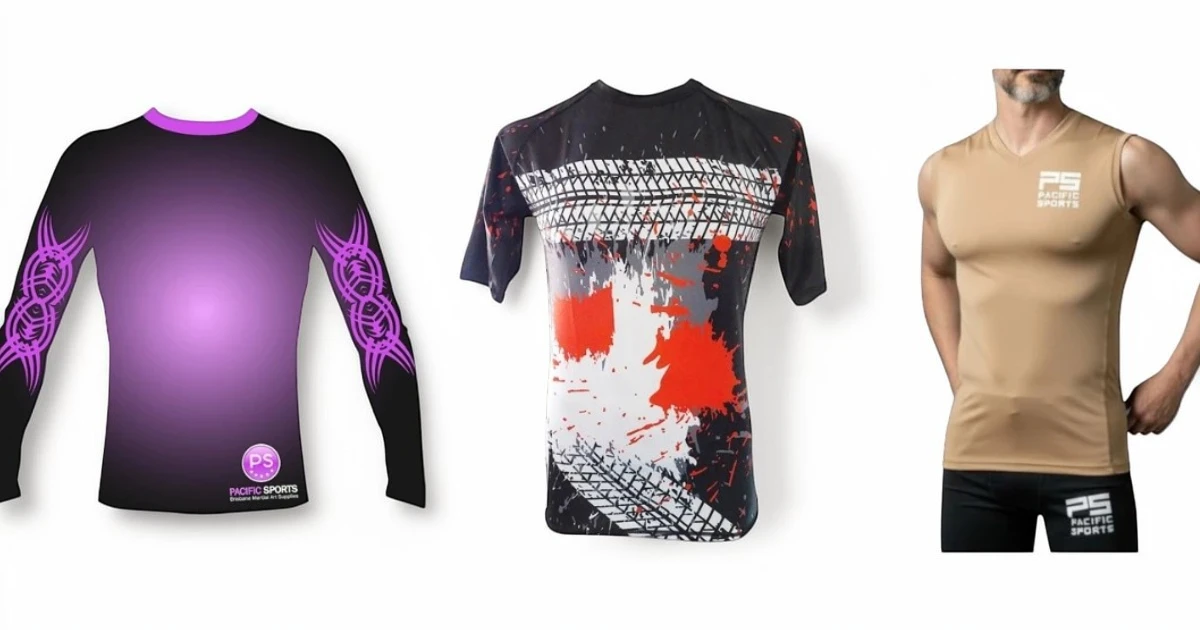
Rash guards come in printed designs — sublimated directly into the fabric so they don’t peel, crack, or fade. Compression wear typically comes in solid colours, most often black or skin-tone. The reason is practical: compression wear is designed to be worn under other clothing, where a print isn’t visible and a neutral colour is preferable. Rash guards are designed to be seen, whether worn alone in no-gi training or as an outer layer.
Antimicrobial treatment
Pacific Sports rash guards include antimicrobial technology that inhibits the growth of bacteria and fungi. This is particularly relevant for grappling, where skin-to-skin contact and mat exposure are constant. Standard compression wear doesn’t include this treatment, though the fabric still provides a physical barrier against direct contact.
What they share
Both are made from polyester-spandex blends that stretch in four directions, wick moisture, dry quickly, and hold their shape wash after wash. Both can be worn under a gi or as standalone training attire for no-gi work. Both provide a barrier between your skin and the mat, your skin and a training partner, and your skin and whatever bacteria is living on the equipment. The protection level is similar — the rash guard’s antimicrobial treatment and reinforced stitching give it a slight edge in grappling-specific scenarios, but for general training the difference is small.
Understanding the benefits of each can guide your decision-making in the rash guard vs compression wear martial arts debate.
The combination of rash guard vs compression wear martial arts can offer a unique advantage in training scenarios.
Which one should you use?
Evaluating the implications of rash guard vs compression wear martial arts is critical for any serious practitioner.
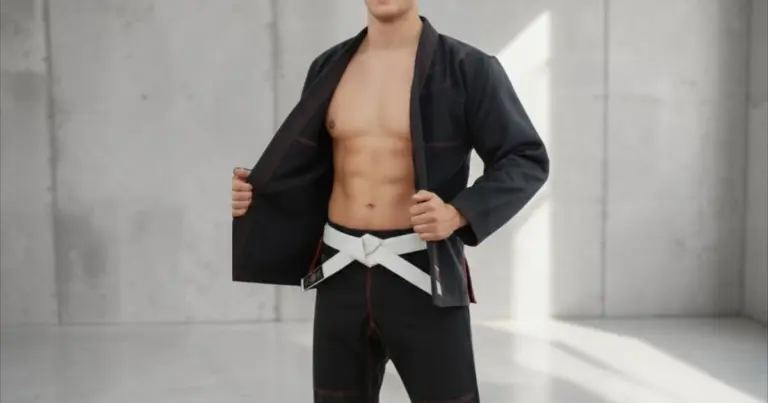
For BJJ, Judo, and wrestling — where you’re on the mat constantly and skin protection is the priority — a rash guard is the better choice. The reinforced stitching, rubber hem grip, and antimicrobial treatment are all directly relevant to what you’re doing.
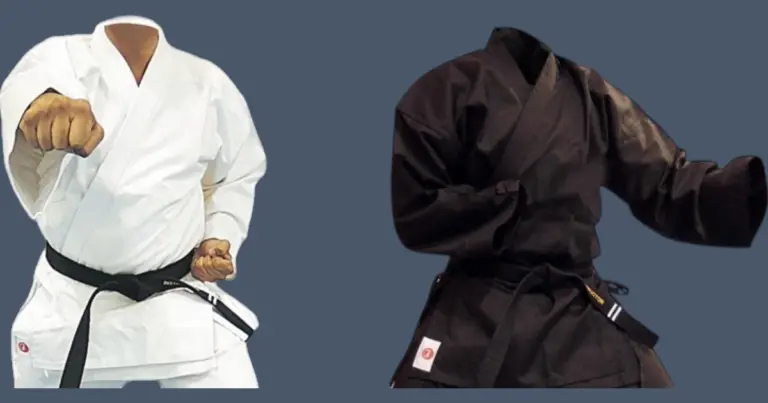
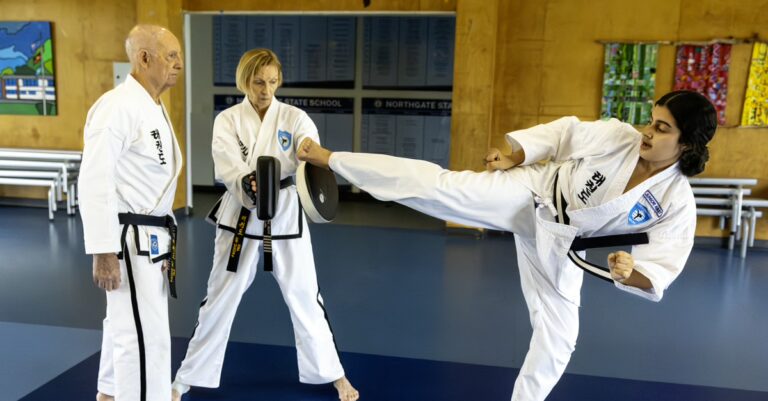
For Taekwondo and Karate under a gi — where the main purposes are modesty, muscle support, and sweat management — compression wear is perfectly suited and more comfortable given its lighter fabric.
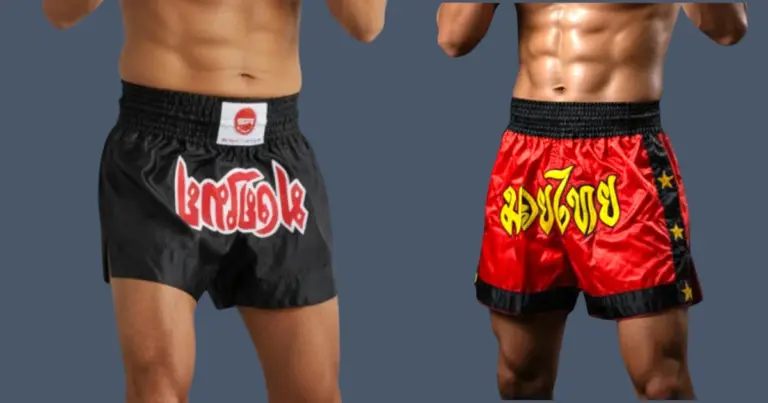
For Muay Thai and kickboxing — where you’re on your feet and not rolling — either works fine. Compression shorts are common under board shorts or training pants.
Ultimately, the choice boils down to personal preference within the context of rash guard vs compression wear martial arts.
For no-gi MMA training — many practitioners layer both. A rash guard on top for skin protection and a set of compression shorts underneath for muscle support. Both Pacific Sports rash guards and compression wear are not see-through when stretched, which matters for no-gi training where you’re not covered by a gi jacket.
For outdoor training or water sports — rash guards. The thicker fabric handles sun, sand, and saltwater better than compression wear.
Can you wear both at once?
Yes, and it’s common in BJJ. A long-sleeve rash guard on top with compression shorts underneath gives you skin protection across most of your body surface. The rash guard handles the contact-heavy upper body exposure; the compression shorts provide the muscle support and coverage below. It’s a practical combination rather than overkill.
Quick comparison
- Fabric: Rash guard slightly thicker; compression wear slightly better at wicking
- Stitching: Rash guard uses reinforced flatlock; compression uses standard flatlock
- Hem: Rash guard has rubber grip to prevent ride-up; compression relies on longer cut
- Design: Rash guard comes in printed designs; compression generally solid colour
- Antimicrobial: Rash guard yes; compression wear no
- Best for grappling: Rash guard
- Best under a gi: Either, depending on discipline and preference
- Best for striking arts: Either
Frequently Asked Questions
Can I wear a rash guard instead of compression wear under my gi?
Yes. Many BJJ practitioners wear a rash guard under their gi rather than compression wear, specifically for the antimicrobial protection and reinforced stitching. The main consideration is bulk — make sure the rash guard fits smoothly under the gi jacket without bunching at the collar or shoulders.
Is one warmer than the other?
Slightly. Rash guard fabric is a little thicker, so it retains marginally more body heat. In a cold gym this can be an advantage; in a hot one it might not be. Compression wear’s thinner fabric and better wicking makes it the more comfortable option in warm, humid conditions.
Do both prevent mat burns?
Both serve distinct purposes, but the choice between rash guard vs compression wear martial arts can enhance your training experience.
Both significantly reduce mat burns by covering the skin. The rash guard’s slightly thicker fabric and reinforced stitching give it a small advantage in extended groundwork where friction is constant, but either is far better than training with bare skin in grappling arts.
Can compression wear be worn for surfing or swimming?
It’s not designed for aquatic use. Compression wear absorbs water rather than repelling it, and saltwater and chlorine degrade the spandex faster than fresh water. For water sports, a rash guard is the right choice.
How do I wash each one?
Both: machine wash cold with mild detergent, no fabric softener, and air dry. Fabric softener breaks down spandex elasticity over time and should be avoided for both. Don’t tumble dry either — heat damages the stretch fibres. Wash after every session regardless of how long you trained.
Does Pacific Sports sell both?
Yes. Rash guards are available in short and long sleeve in sizes S–XL. Compression wear — tops, shorts, and pants for men and women — is available in sizes M–2XL in black and skin-tone. See the individual product pages for size charts before ordering, as sizing varies between the two ranges.
In conclusion, weighing the options of rash guard vs compression wear martial arts can optimize your performance.
In summary, when considering rash guard vs compression wear martial arts, it’s essential to weigh the benefits of each type to suit your specific training needs.