Benefits of wearing a martial arts uniform
Why Martial Artists Wear a Gi: Function, Symbolism, and Tradition
The gi — the jacket, pants, and belt worn in Karate, Taekwondo, Judo, BJJ, and Jiu-Jitsu — is more than just training clothes. Understanding what it represents and why it’s designed the way it is gives you a deeper appreciation of why dojos around the world have maintained it as standard training attire for over a century.
Where the gi came from
The word “gi” is a shortened form of keikogi — from keiko (practice) and gi (clothing) — or sometimes dogi, from do (way) and gi (clothing). Either way, it means practice clothes or clothes for the way.
The modern gi traces directly to Jigoro Kano, the founder of Judo, who in the late 19th century designed a training uniform based on the style of the traditional Japanese kimono. His judogi — a robust jacket, loose trousers, and belt — became the template for martial arts uniforms across disciplines.
Over time, the gi evolved to suit different martial arts. Karate adapted it with lighter fabric suited to striking and agility rather than grappling. Taekwondo modified the jacket into a V-neck pullover style — the dobok — reflecting the discipline’s striking focus rather than the collar-grabbing of throwing arts. BJJ added reinforced stitching at the shoulders, knees, and collar to handle the specific stresses of ground grappling. The evolution continues today, with different cuts, fabrics, and colours developed for different needs.
What a gi identifies
A uniform’s primary function is identification — and a gi identifies its wearer on several levels simultaneously.
At the most basic level, a gi identifies you as a martial artist. Just as a white coat identifies a doctor or a police uniform identifies an officer, a gi marks its wearer as someone who trains in a gi-based martial art. This is general identification.
More specifically, what you wear within the gi tells people more. The colour of your belt identifies your rank. Stripes on the belt indicate finer gradations of skill within a rank. A black collar or black panel on a jacket might identify an instructor in some schools. The extra stitching at the knees of a BJJ gi identifies the discipline. These are forms of specific and symbolic identification.
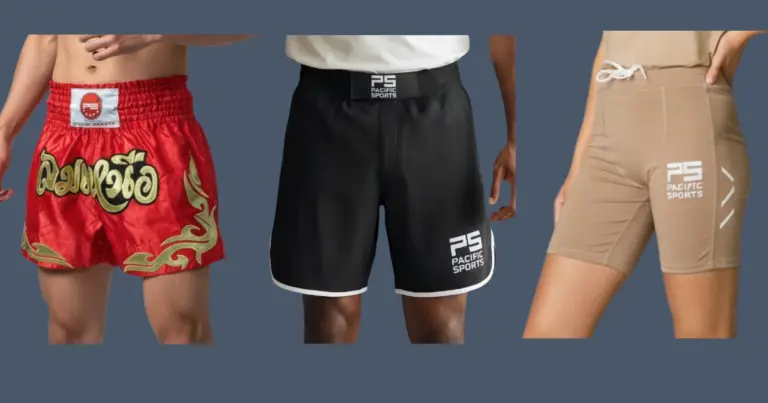
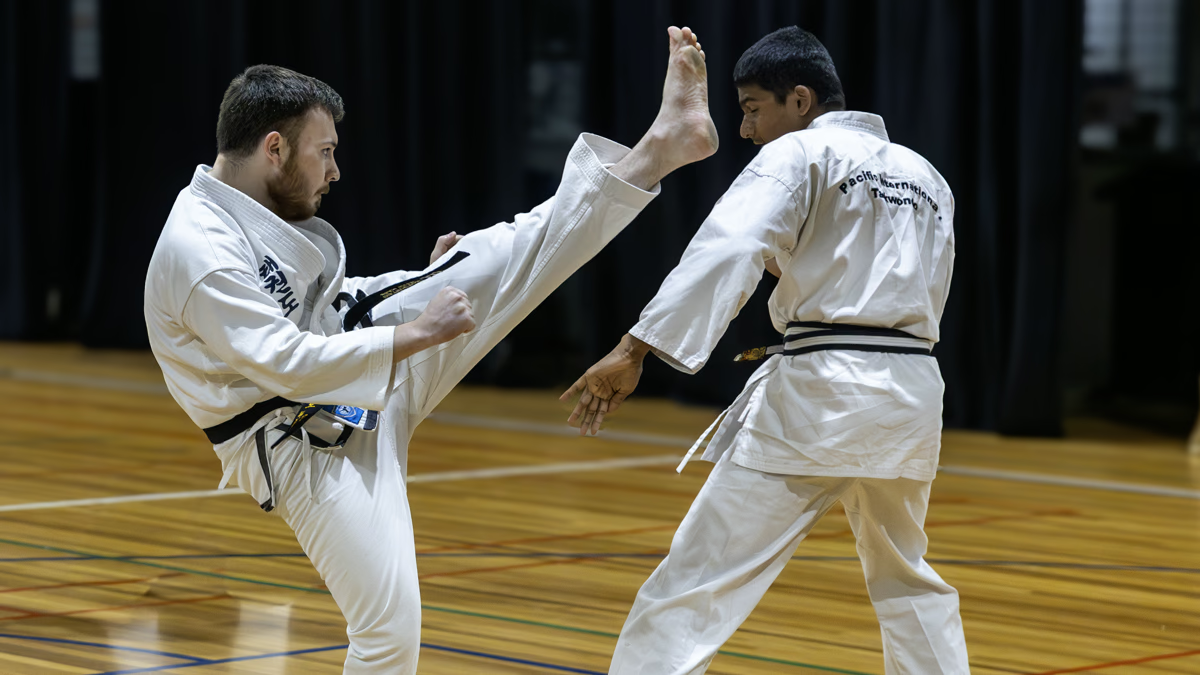
Social identification comes from the badge or emblem sewn onto the gi — your club or school affiliation, visible to everyone in the dojo. Cultural identification comes from lettering: “Taekwon-Do” written in Korean and English reflects the spread of a Korean martial art into English-speaking countries; Thai lettering on Muay Thai shorts signals cultural roots even when worn far from Thailand.
All of these layers of identification work together. A practitioner walking into a dojo wearing a well-maintained white gi with a brown belt, a school badge, and Korean lettering communicates a great deal before they’ve thrown a single technique.
Why the gi is designed the way it is
Every feature of a gi serves a practical purpose. None of it is arbitrary.
The jacket is cut generously through the shoulders and chest to allow the full range of punching, blocking, and throwing movements without pulling tight. The collar and sleeve edges have reinforced, multiple-line stitching because these are the areas grabbed for throws and takedowns — they need to withstand thousands of repetitions of that stress without tearing.
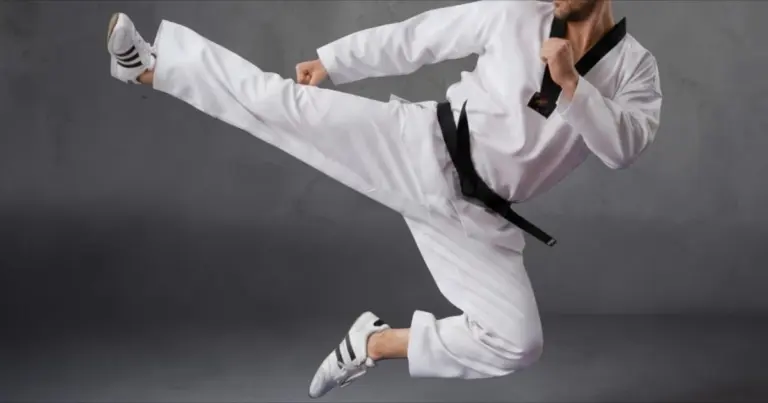
The pants have a gusseted crotch — an extra panel of fabric sewn into the inner seam — specifically to allow high kicks without putting the seams under excessive stress. Without a gusset, kicking in gi pants risks splitting the seam every time you raise your leg above waist height. The elasticated waistband with inner drawstring gives a secure, adjustable fit that stays in place through fast movement and direction changes.
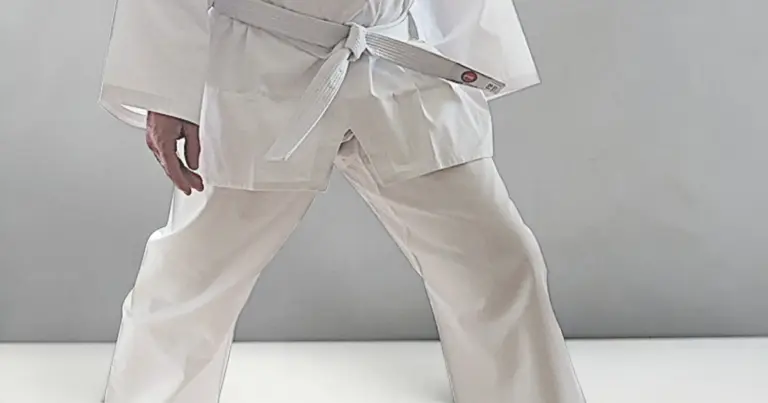
The belt keeps the jacket closed during training and signals rank. It’s tied in a specific way that holds everything in place while allowing full body rotation for kicks, punches, and throws.
The fabric — cotton, canvas, or poly-cotton — is chosen for durability, breathability, and the ability to absorb sweat during intense sessions. Heavier canvas fabric produces an audible snap on crisp techniques, which is why advanced practitioners and kata competitors often prefer it. Lighter poly-cotton breathes better in warm climates and suits beginners who are still developing their movement.
What wearing a gi means
There’s a psychological dimension to putting on a gi that experienced practitioners recognise even if they’ve never put a name to it. Psychologists call it enclothed cognition — the idea that what you wear activates the mental associations attached to it. When you put on your gi, tie your belt, and walk onto the mat, something shifts. You’re not in casual clothes any more. You’re in training mode.
Beyond the individual psychology, a gi carries collective meaning. When everyone in a dojo wears the same uniform, rank differences are minimised — a beginner and a black belt are dressed the same way, differentiated only by their belt. This creates a sense of shared community and mutual respect that casual training clothes don’t produce in the same way.
The values that the gi represents — discipline, commitment, respect for tradition, humility in learning — aren’t separate from the training. They’re part of it. Wearing the gi is the physical expression of deciding to pursue a martial art seriously, to respect the people you train with, and to honour the tradition you’re entering.
Some schools let beginners train in regular sportswear initially, which is a practical approach — it costs nothing while someone is finding out whether they’ll continue. But most schools introduce the gi relatively early, because the act of putting on a proper uniform changes how students approach training. It’s not ceremonial for its own sake. It works.
Colour and what it signifies
White has been the traditional gi colour since Kano’s original judogi — it represented purity and a beginner’s mind, the idea of entering training without ego or preconception. It’s still the standard across most gi-based arts and the safest choice if you’re unsure what your school requires.
Black gi are worn by higher-ranking practitioners or instructors in some schools — though in BJJ, black gi carry no rank significance and are worn at all levels. Blue is standard alongside white in Judo and BJJ competition. Other colours vary by school and organisation.
Always ask your instructor which colour is appropriate for your school and any competitions you plan to enter before buying anything other than white.
Frequently Asked Questions
Do I need a gi to start martial arts training?
Not always immediately. Many schools let beginners train in comfortable sportswear for the first few sessions while they decide whether to continue. Once you commit, your instructor will tell you which gi is required for your discipline and school. Don’t buy a gi before your first class — ask your instructor first so you get the right style and colour.
Why does the gi have a belt if rank is already shown by the belt colour?
The belt serves two purposes simultaneously — it holds the jacket closed during training and signals rank through its colour and stripes. In some schools, the jacket itself also carries rank indicators like collar colour or panel colour, but the belt is the primary and universal rank marker across all gi-based arts.
Can I wear the same gi for different martial arts?
At club training level, a standard European cut gi in the appropriate weight works across Karate, Judo, and BJJ. For competition, different organisations have specific gi requirements — IBJJF BJJ competitions require gi that meet their specifications; WKF Karate competitions have their own requirements. Check the rules for your specific event before buying a competition gi.
Why do some schools let beginners wear casual clothes?
It’s a practical and welcoming approach. A new student who isn’t sure they’ll continue doesn’t need to invest in a gi immediately. Once they commit to training, the gi becomes part of that commitment. Some schools see the transition from casual clothes to a gi as a meaningful milestone — the student has decided to take the journey seriously.
Does the gi need to be ironed?
For regular training — no. The wrinkles from washing smooth out within the first few minutes of training from body heat. For grading, competition, or demonstration — yes. Your gi should look sharp for formal occasions. Avoid ironing canvas or heavy cotton gi regularly as repeated ironing weakens the threads over time.
How is a gi different from a dobok?
A dobok is the Taekwondo-specific version of the gi. The main visible difference is the jacket — a traditional gi has overlapping lapels that cross over the chest, while a dobok jacket has a V-neck collar worn like a pullover. This reflects Taekwondo’s striking focus — the lapels of a traditional gi are designed to be grabbed for throws, which isn’t part of Taekwondo competition. Both consist of jacket, pants, and belt, and both are washed and cared for the same way.
Understanding the martial arts gi meaning and tradition provides insights into the cultural significance and history behind the attire.
Understanding the martial arts gi meaning and tradition provides insights into the cultural significance and history behind the attire.