Kids Shin Guards for Martial Arts
Shin Guards for Martial Arts: A Guide for Adults and Parents
If you’re new to martial arts training, you might notice that some students wear shin guards and some don’t. Whether you need them — and which type to buy — depends on your discipline, your training stage, and in the case of children, how seriously they’re committed to continuing. Here’s a practical guide covering both adult and kids’ shin guard decisions, including the best options for shin guards martial arts kids Australia.
A brief history
Shin protection isn’t a modern invention. Soldiers in ancient Rome and Greece wore a piece of metal leg armour called a greave to protect the lower leg during battle. Shin pads for sport drew on the same principle — protecting one of the body’s more exposed and vulnerable areas from impact. The materials have changed considerably, but the purpose hasn’t.
Three reasons to wear shin guards
Your shins aren’t conditioned yet
Experienced martial artists develop shin conditioning over years of training — repeated controlled impact gradually toughens the bone and surrounding tissue. When you’re new, that conditioning doesn’t exist yet. A kick that an experienced practitioner absorbs without much discomfort can leave a beginner with significant bruising. Deep shin bruising takes time to heal and can keep you out of training for days or weeks. Shin guards protect you while that conditioning develops.
Deep bruising restricts training
This is the practical reality that beginners often underestimate. A bruised shin isn’t just painful — it disrupts your ability to train properly until it heals. You’ll pull back from contact, compensate in your technique, and lose training time. Shin guards significantly reduce the frequency and severity of this kind of injury, which means more consistent training and faster progress.
Confidence to practice new techniques properly
Fear of getting hurt changes how you train. If you’re worried about your shins taking a kick, you’ll rush techniques, pull back prematurely, or avoid certain combinations altogether. Shin guards remove that mental barrier and let you focus on executing techniques correctly rather than protecting yourself from the consequences of getting them wrong. Think of it the same way you think about a mouthguard — you wouldn’t spar without one, not because you expect to get hit every round, but because knowing it’s there lets you train freely.
When do you actually need shin guards?
Not every training context requires them. Heavy bag work and pad work don’t generally require shin guards — you’re not receiving kicks, and the bag or pad absorbs your strikes. Contact sparring is where shin guards earn their place — your partner may be throwing kicks and blocks as if you’re wearing protection, and if you’re not, the experience is unpleasant at best and injurious at worst.
Check with your instructor before buying. Shin guards aren’t standard equipment in all schools and styles — some disciplines don’t use them at all, others require them for all sparring. The experienced students in your class are usually the best source of advice about what works in your specific training environment.
Choosing the right type
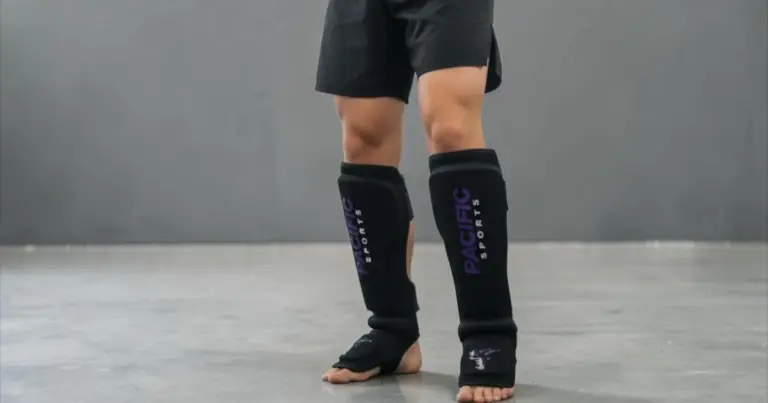
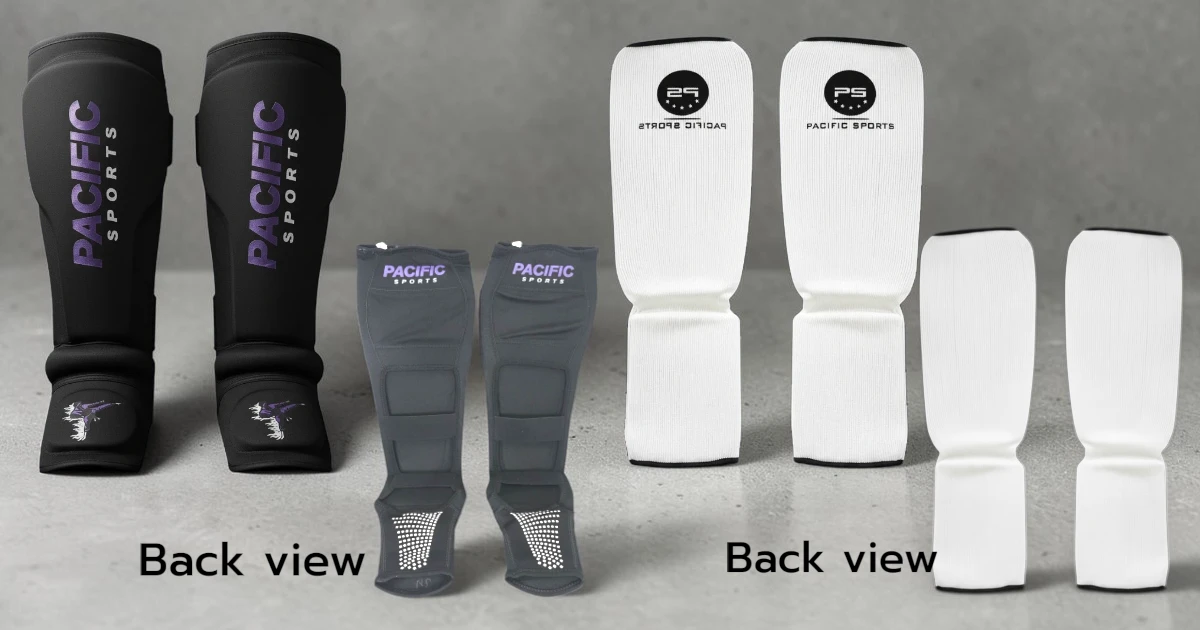
Shin guards range from basic pull-on cotton-covered foam pads to high-density neoprene guards with velcro straps. The right choice depends on the contact level you’re training at.
For light-contact training and beginners, a lightweight flexible pull-on guard is the right starting point. It provides adequate protection for the contact levels you’ll encounter, doesn’t restrict movement, and is comfortable enough to wear through a full session. Starting with light flexible guards before progressing to heavier contact protection is sensible — getting used to wearing any guard takes a session or two, and starting light makes that adjustment easier.
For moderate to heavy contact sparring, high-density guards with velcro straps at the back provide more robust protection. The firmer foam handles stronger impact without transmitting the force to the shin. The strap system holds the guard in place during fast movement better than pull-on elasticated guards do at higher contact levels.
Both types are available with instep coverage as well as shin coverage. The instep is the top of the foot — a vulnerable area during kicking exchanges where the foot can make contact at unexpected angles. If your training involves significant sparring, shin-ankle-instep guards that cover all three areas are worth considering.
For parents: kids shin guards
Children’s shin guards involve a few additional considerations that adult purchases don’t.
How to measure for the correct fit
Measure from the bottom of your child’s kneecap to approximately one inch above the top of their shoe. This gives you the length the shin guard needs to cover. A correctly fitted shin guard should feel comfortable and secure — your child shouldn’t need to stop and readjust it during training. If it’s shifting during normal movement, it’s either too loose or the wrong size.
Which type to buy for a child
This depends partly on how committed your child is to continuing. Basic pull-on foam shin pads are the practical starting choice — they’re lightweight, comfortable, easy to get on and off independently, and economical. If your child decides martial arts isn’t for them in six months, you haven’t invested heavily. Once it’s clear they’re committed and training regularly, moving to a higher-density guard with straps gives better protection for more intensive contact work.
As with adults, always check with your child’s instructor before buying. Shin guards may or may not be required in their specific style and school. Buying equipment the school doesn’t permit, or missing equipment the school requires, is easily avoided by asking first.
Caring for kids shin guards
Children’s shin guards don’t necessarily need washing after every session, but they do need to be aired out fully after every use. Damp, sweaty shin guards sealed in a training bag develop odour and bacteria quickly. Air them out after training — leave them open rather than putting them straight back in the bag. A wash every one to two weeks depending on training frequency keeps them hygienic. Follow the care instructions that come with the specific guards you buy, as different materials have different washing requirements.
Frequently Asked Questions
Do I need shin guards for bag work and pad work?
Generally no. Bag work and pad work involve you delivering strikes rather than receiving them, and the bag or pad absorbs the impact. Shin guards are primarily for contact sparring where you’re also on the receiving end of kicks. Check with your instructor — some schools require them for all training as a habit-building measure, regardless of the drill type.
How long does it take to get used to wearing shin guards?
Most practitioners adapt within two or three sessions. The first time you train in shin guards, the extra bulk around the lower leg feels unfamiliar and can affect your footwork and kicking slightly. This adaptation happens quickly — within a few sessions the guards feel normal and stop being a distraction. Starting with lightweight flexible guards rather than heavy-contact guards makes the initial adjustment easier.
Can I condition my shins without shin guards?
Yes — controlled bag work and certain conditioning drills are specifically used to toughen the shins over time. However, this conditioning process takes months to years, and during that time your shins are vulnerable to injury in contact sparring. Wearing shin guards for sparring while doing conditioning work on bags and pads gives you the best of both — protection where you need it, conditioning where it’s appropriate.
What’s the difference between shin guards and shin-ankle-instep guards?
Shin guards cover the front of the lower leg only. Shin-ankle-instep guards extend coverage to the ankle and the top of the foot. For disciplines involving significant kicking exchanges where the foot itself is at risk — Taekwondo, Muay Thai, Kickboxing — the additional ankle and instep coverage is worth having. For disciplines where the primary risk is to the shin itself, basic shin guards are sufficient.
At what age can children start wearing shin guards?
As soon as they start any contact training. There’s no minimum age — if a child is doing contact sparring, they should have appropriate protection regardless of how young they are. Most martial arts suppliers including Pacific Sports offer shin guards in extra small sizes suitable for young children. The measuring method above works for any age — bottom of kneecap to one inch above the shoe.
Should I replace shin guards regularly?
Replace them when the foam no longer bounces back after compression — permanently compressed foam has lost its shock-absorbing function. Also check for strap wear on velcro-fastened guards — a strap that doesn’t hold the guard securely is a safety issue. With proper care, a quality pair of shin guards should last one to two years of regular training before the foam degrades meaningfully.