How to select Muay Thai shorts
Muay Thai Shorts Australia: Why the Design Matters and the Kicks They’re Built For
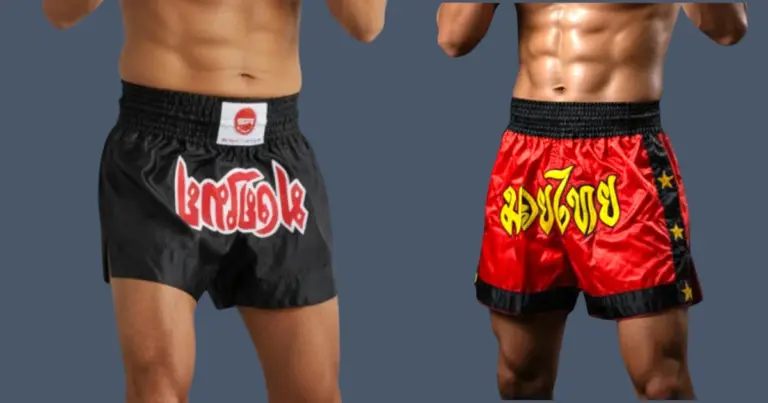
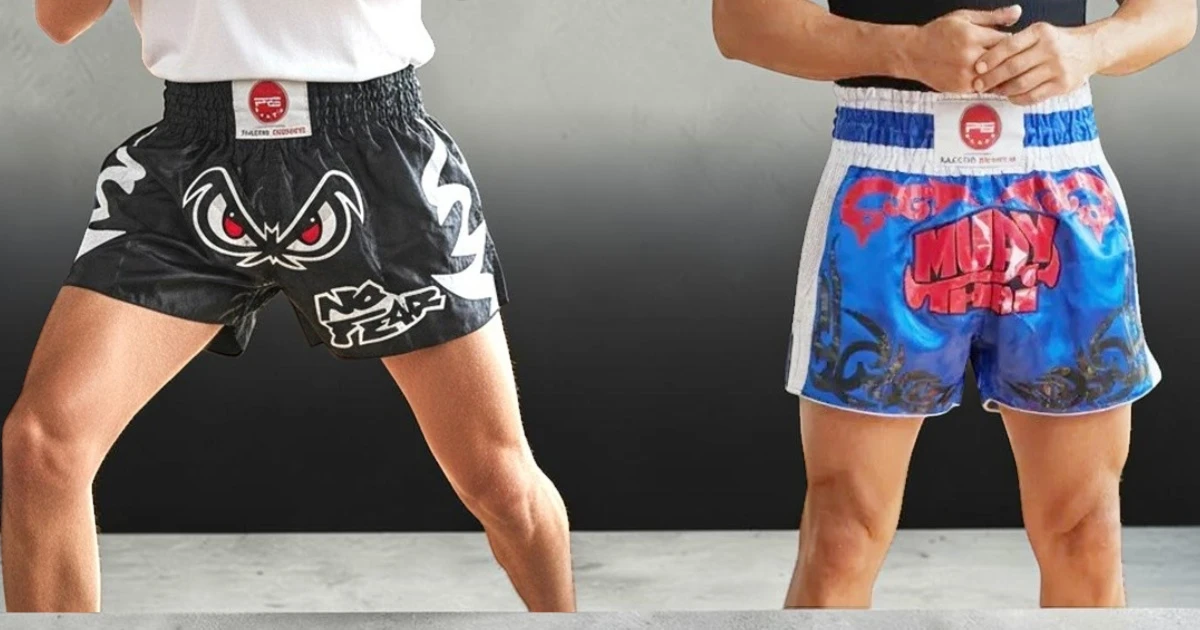
Muay Thai shorts look distinctive — shorter than most training shorts, wider in the cut, often in bold colours with Thai lettering. That design isn’t just aesthetic. Every feature of a Muay Thai short serves a specific purpose for the techniques the art requires. This post covers what makes Muay Thai shorts different from other training shorts, and goes through the kicks they’re designed to support — including the Thai names and technical details that most English-language guides skip.
Why Muay Thai shorts are designed differently
Muay Thai is sometimes called the art of eight limbs — punches, elbows, knees, and kicks, using all eight striking weapons the body has above the waist. Compare this to kickboxing, which uses four limbs — punches and kicks only. That difference in technique drives a difference in shorts design. The most visible difference is length. Muay Thai shorts are cut shorter than kickboxing shorts specifically to allow knee strikes without fabric restriction. When you drive a knee upward into a clinch, longer shorts create drag and limit the height and speed of the strike. Kickboxing shorts can afford to be longer because knees aren’t in the striking arsenal. The side splits are the other critical design feature. Muay Thai kicking techniques — particularly the roundhouse and the spinning heel kick — require a full, unobstructed range of hip rotation. Side splits cut into the outer seam of the shorts allow the leg to move freely without the fabric pulling across the thigh. Pacific Sports Muay Thai shorts have reinforced stitching at the split seams specifically because this is the highest-stress point in the shorts under kicking load — unreinforced splits tear. The waistband is 10cm elasticated with an inner drawstring. The elasticated waistband keeps the shorts in place during fast spins and direction changes without requiring a tight fit that restricts movement. The drawstring allows fine adjustment for different body shapes. Together they give you a secure fit that doesn’t shift during training without feeling constricting. The fabric — polyester-silk or polyester-satin — is chosen for its combination of lightweight feel and durability. Polyester provides the strength; silk or satin gives it the smooth, low-friction feel against the skin that allows free leg movement. The result is shorts that feel almost weightless during training, which matters for kick speed.
The kicks Muay Thai shorts are built for
In Australia, the popularity of Muay Thai shorts is increasing, reflecting the growing interest in the sport.
Understanding the techniques helps you appreciate why the design features exist. Here are the main Muay Thai kicks with their Thai names and technical details.
Teep (front kick)
The teep is the first kick most Muay Thai students learn and arguably the most tactically important. Unlike a standard front kick, the teep serves two distinct purposes depending on how it’s executed — striking or pushing — and the distinction matters technically. When the ball of the foot is used, the teep strikes the opponent to cause damage. This is called trong. When the sole of the foot is used, the teep pushes the opponent to disrupt balance and create distance. This is called top. Both are valid tactical choices depending on the situation. The teep can also be performed with a jump — known as kradot teep — to close range against a taller opponent or to increase force. This gives four main variations: teep top, kradot teep top, teep trong, and kradot teep trong. A common variation is to switch the legs mid-technique, feinting a knee strike with one leg while the switched leg delivers the teep. The lightweight fabric of Muay Thai shorts is particularly relevant for the teep — any fabric weight on the kicking leg affects the speed of the snap and retraction.
Tae tat (roundhouse kick)
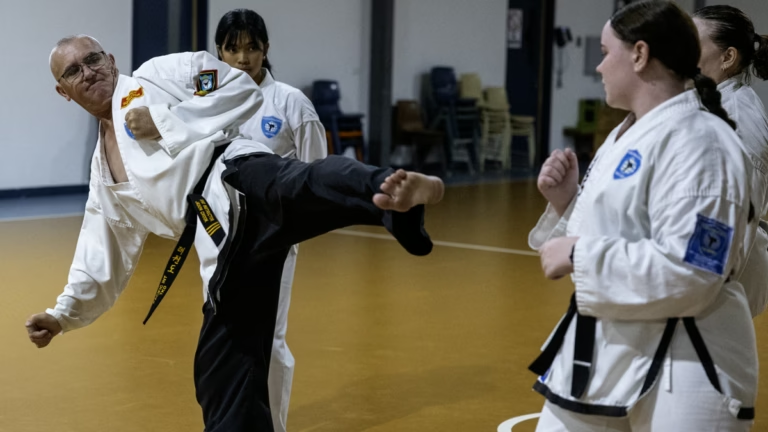
The tae tat is the most used kick in Muay Thai sparring and competition. Step your lead leg forward, pivot on it at roughly 45 degrees, bring up the rear knee, turn the hip, snap the knee, and drive the shin into your target. The height of the knee raise determines whether you strike the head, body, or legs. The shin — not the instep — is the primary striking surface in Muay Thai roundhouse kicks. This is what distinguishes Muay Thai technique from Karate and Taekwondo roundhouse execution, and why Muay Thai practitioners condition their shins specifically. The side splits in the shorts are most important for the tae tat. Hip rotation in a full-power roundhouse requires the outer thigh to be completely unobstructed — any fabric pull at that point reduces rotation and therefore power.
Tae tad (side kick)
The tae tad is used less frequently than the teep or tae tat but appears regularly in combinations, often as a setup or a fake. Chambering the knee to the side and extending the heel straight out, the side kick targets the midsection or ribs. In Muay Thai it’s typically used in combination rather than as a primary attack in isolation.
Tae khao (axe kick)
A powerful kick that uses gravity as part of its force generation. The leg is raised as high as flexibility allows, then the heel is driven powerfully downward in a chopping motion — like an axe falling. The targets are the top of the skull or the shoulder blades. The downward momentum adds to the force in a way that no other kick does, making it particularly effective against opponents who are shorter or crouched.
Tae klap lang (spinning heel kick)
A spin on the lead foot while the rear foot lifts to strike with the heel. Multiple spins can be executed to build speed and power before the strike lands. The elasticated waistband is specifically useful here — during fast spins, shorts without a secure waist will shift and become a distraction at exactly the wrong moment.
Tae chiang (question mark kick)
One of the more deceptive techniques in Muay Thai. The kick begins exactly like a teep — the opponent reads it as a front kick and prepares their defence accordingly — but then redirects into a tae tat roundhouse trajectory. Done well, the opponent has committed to defending the wrong kick and is caught by the roundhouse. The name refers to the curved path the foot travels, resembling a question mark. This kick requires precise hip control and timing — the side splits in the shorts need to accommodate both the initial teep-like chamber and the sudden redirection into a roundhouse arc.
Muay Thai shorts vs kickboxing shorts
If you train both Muay Thai and kickboxing, you can use Muay Thai shorts for both — the shorter cut and side splits work fine for kickboxing. The reverse isn’t always true: longer kickboxing shorts can restrict knee strikes and feel heavy during Muay Thai clinch work. If you’re buying one pair for both disciplines, Muay Thai shorts are the more versatile choice.
Care
Machine wash on a gentle cycle or hand wash. The polyester-silk and polyester-satin fabrics hold colour and shape well under regular washing — don’t use hot water or tumble dry on high heat, which degrades the fabric faster. Keep two pairs if you train frequently so one can be washed while the other dries.
Specifications
- Fabric: Polyester-silk or polyester-satin
- Waistband: 10cm elasticated with inner drawstring
- Side splits: Yes — with reinforced stitching
- Sizes: M, L, XL — see size chart on product page
- Care: Machine wash gentle or hand wash, air dry
- Suitable for: Muay Thai, Kickboxing, MMA, Boxing, CrossFit
Frequently Asked Questions
Why are Muay Thai shorts so short compared to other training shorts?
The shorter length allows unrestricted knee strikes — a fundamental technique in Muay Thai that doesn’t feature in kickboxing. The cut also allows full hip rotation for roundhouse kicks without fabric pulling across the thigh. It’s a functional design choice, not just a stylistic one.
Can I wear Muay Thai shorts for kickboxing training?
Yes. The side splits and lightweight fabric work equally well for kickboxing. The shorter length is the only notable difference, and most kickboxing practitioners find Muay Thai shorts comfortable and practical. The reverse — using longer kickboxing shorts for Muay Thai — can restrict knee strikes and clinch work.
What’s the difference between polyester-silk and polyester-satin Muay Thai shorts?
Both are polyester-based fabrics with a smooth, lightweight finish. Satin has a slightly higher sheen and a firmer hand; silk has a softer, more fluid drape. Both perform equivalently for training purposes — the difference is primarily aesthetic. Either holds colour well and washes without significant degradation.
Do the side splits tear during training?
Not on quality shorts with reinforced stitching at the split seams. This is the highest-stress point in the shorts and where cheaper shorts typically fail first. Pacific Sports Muay Thai shorts have reinforced stitching at the splits specifically to prevent this. If you’re finding splits tearing on any shorts, it’s a stitching quality issue rather than a design flaw.
How do I find my correct size?
Check the size chart on the product page — Muay Thai shorts sizing varies between brands and the waist measurement is the primary reference point. The elasticated waistband and inner drawstring give enough adjustment range to accommodate slight sizing variation, but starting with your actual waist measurement against the chart will get you closest to the right fit.
Can Muay Thai shorts be worn for general fitness training?
Yes. The lightweight fabric, side splits, and secure waistband work well for CrossFit, running, and gym training. Many practitioners wear Muay Thai shorts as general training attire outside of martial arts sessions. The fabric dries quickly and moves freely — both practical features for any high-intensity training.