Can I lose weight by wearing compression garments?
Can Compression Garments Help You Lose Weight?
It’s one of the most common questions about compression wear, and the honest answer is: probably not in any meaningful way. Here’s what the evidence actually says, what compression wear genuinely does do for your training, and why that’s still worth knowing.
The weight loss question
There’s currently no reliable research demonstrating that wearing compression garments causes weight loss. Some products are marketed on the idea that compression increases sweating and therefore burns more calories or reduces body fat — but this conflates water loss with fat loss. Any weight you lose from sweating more is water weight, and it comes back the moment you rehydrate. It’s not fat loss.
The tried and tested formula for losing weight hasn’t changed: regular exercise combined with a controlled, balanced diet. Compression wear doesn’t shortcut that process. If someone is selling you compression garments primarily on a weight loss claim, that claim isn’t supported by the evidence.
That said, compression wear does have real, well-supported benefits for training — they’re just different benefits to weight loss.
What compression wear actually does
Improves blood circulation during exercise
The surface pressure applied by compression wear helps push blood back toward the heart more efficiently. More effective circulation means working muscles receive oxygen faster and metabolic waste — the byproducts of muscle activity that contribute to fatigue — is cleared more quickly. This is the mechanism behind most of the other benefits compression wear provides during training.
Delays muscle fatigue
During training, muscles vibrate and oscillate with every movement and impact. Compression wear reduces this vibration by providing support to the muscle belly — like a firm hand stabilising something that would otherwise shake. Less vibration means less energy wasted and less micro-trauma accumulating in the muscle tissue, which pushes back the point at which fatigue sets in. For martial artists doing long training sessions or high-volume drilling, this matters.
Speeds up recovery after training
The circulatory benefits don’t stop when training ends. Wearing compression wear during your cool-down and immediately after training continues to support blood flow while muscles are recovering. Oxygen keeps reaching fatigued tissue; metabolic waste keeps being cleared. The practical result is less soreness the next day and faster readiness to train again — which for frequent trainers is where compression wear arguably provides its greatest value.
Increases body awareness
This benefit gets less attention than the circulatory ones but is genuinely useful for martial artists. The snug, second-skin fit of compression wear provides constant tactile feedback about where your body is in space — what movement scientists call proprioception. When you can feel where your hips, legs, and trunk are positioned throughout a technique, you can make finer adjustments to your movement. For practitioners working on complex techniques like spinning kicks or submission setups where body positioning is critical, this heightened awareness has practical training value.
Supports muscles during explosive movement
The mild to moderate compression reduces muscle oscillation during explosive movements — kicks, takedowns, jumps — which not only delays fatigue but also helps regulate body temperature in the compressed areas. Supported muscles run slightly warmer, which keeps them more pliable and less injury-prone during high-intensity work.
Who benefits most
Compression wear is most valuable for practitioners who train frequently and intensely — those for whom recovery between sessions is a limiting factor. If you train five or six days a week, anything that reduces next-day soreness and speeds recovery directly affects how much quality training you can do over time.
It’s also particularly useful in grappling arts — BJJ, Judo, wrestling — where the skin protection benefits add to the circulatory ones. In striking arts, the muscle support and temperature regulation are the primary practical benefits.
For occasional or beginner practitioners, compression wear is comfortable and won’t hurt, but the benefits are less pronounced than for high-volume trainers. If you’re training twice a week, recovery between sessions probably isn’t your limiting factor yet.
Pacific Sports compression wear
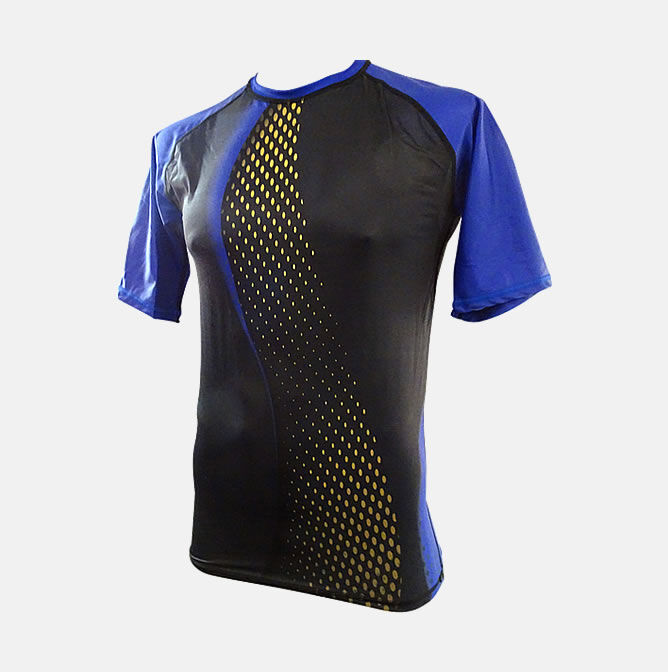
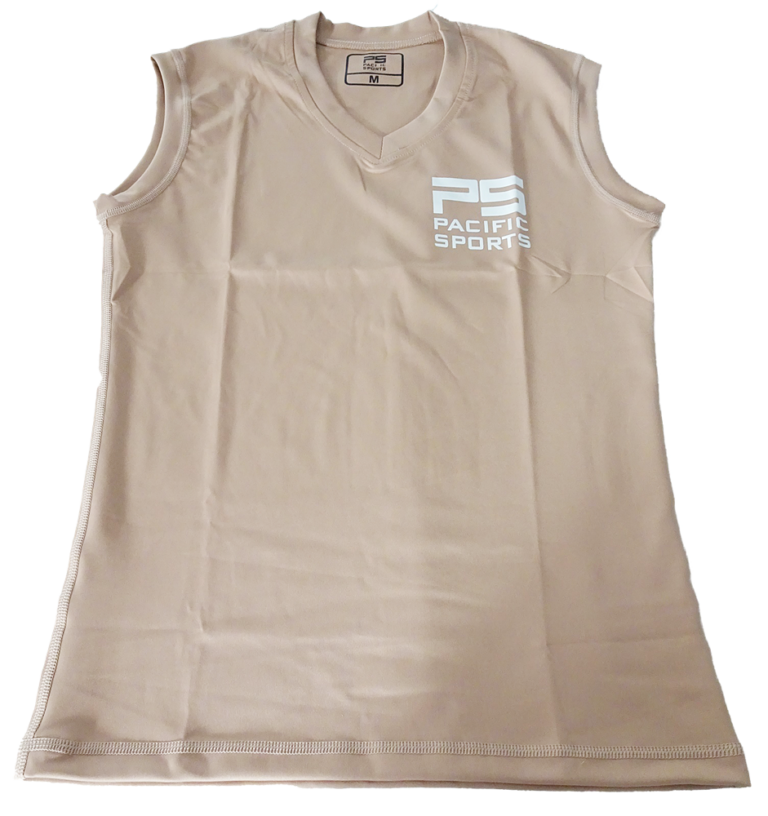
Pacific Sports compression garments are made from 85% polyester and 15% spandex, providing mild to moderate compression suitable for sporting activity. They’re available as tank tops, short sleeve tops, shorts, and full-length pants (spats) for both men and women, in black and skin-tone colours. The fabric is not see-through when stretched, which matters for no-gi training where compression wear is worn as outerwear rather than a layer under a gi.
Available sizes: M, L, XL, XXL for tops and shorts. S, M, L, XL for compression pants. See the size chart on the product page before ordering.
Frequently Asked Questions
Will compression wear make me sweat more and help me lose weight?
It may make you sweat slightly more in the compressed areas because of the warmth generated, but this produces water loss, not fat loss. The weight returns when you rehydrate. There’s no credible evidence that compression wear causes meaningful fat loss. For weight management, training volume and diet remain the determining factors.
Can I wear compression wear all day to get the benefits?
The benefits described here are exercise-specific — they come from the interaction between compression and active muscle use during training. Wearing compression wear while sedentary provides minimal training benefit. It’s also worth noting that compression wear is not designed to be worn while sleeping. Take it off after training and cool-down.
How tight should compression wear be?
Snug but not uncomfortable. You should feel even pressure across the covered area without the garment cutting into you, restricting your breathing, or leaving marks on your skin after wearing. If you’re between sizes, size up — compression that’s too tight is counterproductive and uncomfortable over a long session.
Does compression wear help with existing injuries?
Mild to moderate sports compression wear can provide some support and warmth around injured areas, and the improved circulation may assist recovery. However, Pacific Sports compression wear is designed for healthy athletes during sporting activity — it’s not a medical device. If you have a specific injury, consult a physiotherapist or sports medicine professional before relying on compression wear as part of your management plan.
Is compression wear worth buying if I’m a beginner?
It’s comfortable and practical, but the performance benefits are more pronounced for high-volume trainers whose recovery between sessions is genuinely stretched. As a beginner training two or three times a week, compression wear is a nice-to-have rather than essential. As your training frequency increases, the recovery benefits become more relevant and the investment more worthwhile.
Does compression wear replace warming up?
No. Compression wear helps maintain muscle warmth and supports blood flow, but it doesn’t replace the physiological benefits of an active warm-up — increased heart rate, elevated core temperature, joint lubrication, and neural activation. Always warm up properly before training regardless of what you’re wearing.