Compression Wear for Martial Arts in Australia: Tops, Shorts & Pants
Pacific Sports Compression Wear: Tops, Shorts, and Pants for Martial Arts Training
Compression wear has become standard kit for martial artists across almost every discipline — and for good reason. Whether you’re rolling in BJJ, sparring in Muay Thai, or training under a gi in Karate or Taekwondo, compression tops, shorts, and pants serve practical purposes that go well beyond just looking the part. In Australia, many martial artists are turning to compression wear specifically designed for martial arts.
Pacific Sports compression wear is made from 85% polyester and 15% spandex — a blend that delivers mild to moderate compression, four-way stretch, and effective moisture wicking. It’s available for both men and women in black and skin-tone colours. Here’s what each garment does and when to use it. Don’t miss out on the benefits of compression wear martial arts Australia.
Compression tops
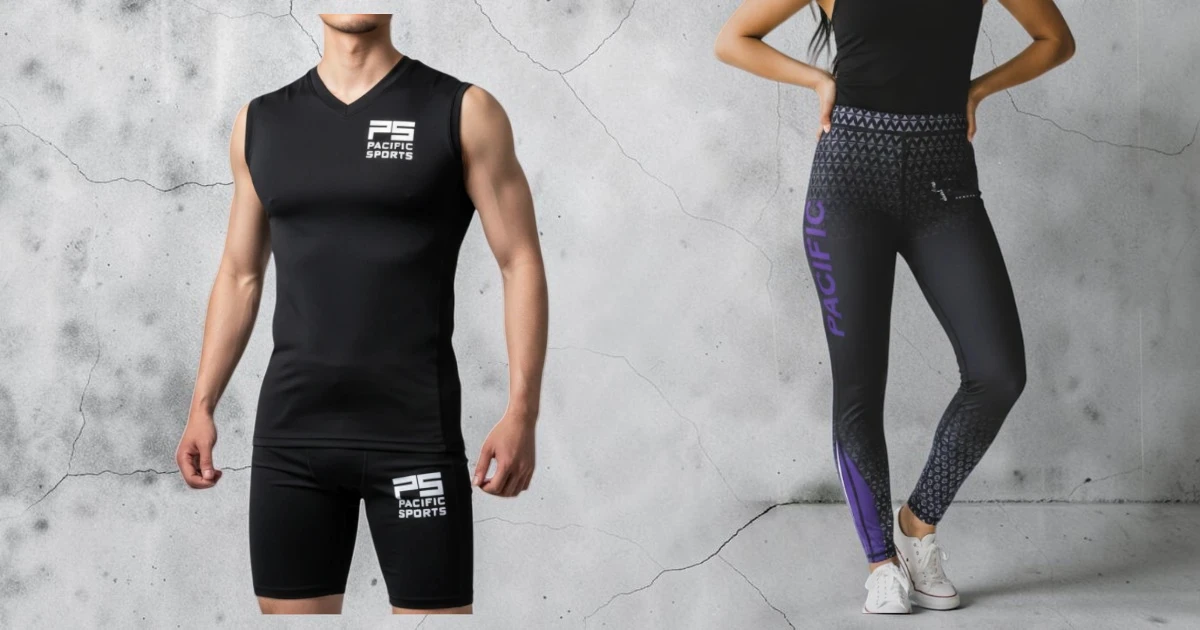
Pacific Sports compression tops are available in two styles — tank top (sleeveless) and short sleeve. Both fit closely to the body, applying mild pressure to support the muscles of the chest, back, and shoulders during training. The tank top design gives more shoulder mobility than a sleeved top, making it a better choice for striking arts where shoulder rotation matters — Muay Thai, Kickboxing, MMA. The short sleeve version provides more upper arm coverage, which is useful for grapplers who want protection against mat friction on the forearms. Both styles can be worn as a standalone training top for no-gi work, or under a gi jacket for Karate, Taekwondo, Judo, or BJJ. The fit is smooth enough to sit flat under a gi collar without bunching. Skin-tone compression tops are less visible under a white gi; black works well under a black gi. The flatlock seam construction means no raised seam edges to chafe against skin during long sessions. The 4-way stretch fabric moves with you rather than restricting you — high kicks, deep takedowns, ground transitions all happen without the top pulling or riding up. Available in: Black and skin-tone | Sizes M, L, XL, XXL | Men’s and women’s cuts
Compression shorts
Compression shorts are one of the most versatile pieces of training gear you can own. They work as a standalone garment for no-gi training, under gi pants for grappling arts, or under Muay Thai, Kickboxing, or MMA shorts for striking disciplines. The wide waistband keeps them firmly in place during explosive movement — no shifting or rolling down during kicks, sprawls, or direction changes. The gusseted construction allows full hip flexion for high kicks and deep takedowns without the fabric pulling across the inner thigh. For women training in gi arts, compression shorts under the gi pants add coverage and comfort during groundwork — particularly in BJJ and Judo where extended mat contact is unavoidable. They’re also practical for Taekwondo, where the gi pants can ride up during high kicks without something underneath to hold them down. The fabric wicks moisture efficiently, which matters during long sessions in hot conditions. Quick drying means they’re ready for the next session without needing extended drying time — important if you train daily and are rotating between two pairs. Available in: Black and skin-tone | Sizes M, L, XL, XXL | Men’s and women’s cuts
Compression pants (spats)
Compression pants — also known as spats, leggings, or tights — cover the full leg from waist to ankle. They’re the most comprehensive skin protection option in the compression wear range and the most useful for grappling-heavy training. In BJJ and Judo, your knees and shins are in constant contact with the mat and with training partners. Mat burns on the knees are one of the most common minor injuries in grappling — consistently painful and slow to heal because they’re aggravated every session. Compression pants eliminate this by covering the knees entirely. Over weeks and months of regular training, this protection adds up to significantly fewer disruptions to your training schedule. For striking arts and stand-up training, compression pants provide muscle support and warmth for the quads, hamstrings, and calves during training. In cold gyms or early morning sessions, keeping the leg muscles warm reduces injury risk during kicking — cold muscles are more prone to strains. Pacific Sports compression pants are not see-through when stretched, which matters for no-gi training where they may be worn as the primary lower body garment. The sublimated design won’t fade with repeated washing. They can be worn under gi pants for grappling, under MMA or Muay Thai shorts for striking, or on their own for no-gi BJJ and wrestling sessions. Available in: S, M, L, XL | Unisex sizing
What to wear when
If you’re unsure which garment suits your training, here’s a quick practical guide:
- BJJ no-gi: Compression top (short sleeve for mat burn protection on forearms) plus compression pants. This is the most complete skin protection setup for groundwork.
- BJJ gi: Compression top under the gi jacket, compression shorts or pants under the gi pants. Skin-tone or black depending on your gi colour.
- Muay Thai / Kickboxing: Compression shorts under your training shorts. A compression top if you want muscle support on the upper body — tank top style works best for shoulder mobility.
- MMA: Compression shorts under MMA shorts for striking rounds. Compression pants if the session includes significant groundwork.
- Karate / Taekwondo (gi): Compression top under the gi jacket for women; optional for men in summer, practical in winter. Compression shorts under gi pants for freedom of movement in high kicks.
- Cold weather / winter training: Compression pants are particularly useful in cold gyms — they keep the leg muscles warm through the early part of a session before your body temperature rises, which directly reduces the risk of muscle strains during kicking.
Care
Machine wash cold after every session. The spandex blend retains its elasticity best with cold water — hot water degrades the stretch fibres over time. No fabric softener — it coats the fibres and reduces moisture wicking. Air dry flat or hang rather than tumble drying. The fabric is wrinkle-resistant and ready to wear straight from drying — no ironing needed.
Frequently Asked Questions
Can I wear compression wear as my only training attire?
Yes, for no-gi training. Compression tops and shorts or pants are widely worn as standalone training attire in MMA, BJJ no-gi, wrestling, and CrossFit. Pacific Sports compression wear is not see-through when stretched, which matters when it’s being worn as outerwear rather than a layer. For gi-based arts, compression wear goes under the gi.
What’s the difference between compression shorts and compression pants?
Coverage and protection. Compression shorts cover the upper leg to mid-thigh. Compression pants cover the full leg including the knees and shins. For training that involves significant mat contact — particularly BJJ and Judo — compression pants provide better protection against mat burns on the knees. For striking arts where mat contact is minimal, compression shorts are usually sufficient and more comfortable in warm conditions.
Do compression tops work as rash guards?
They provide some of the same benefits — skin coverage, moisture wicking, and mild compression. However, Pacific Sports rash guards have reinforced flatlock stitching, a rubber hem grip to prevent ride-up, and antimicrobial treatment specifically for skin protection in grappling. If your primary purpose is protection against mat burns and infection in grappling arts, a rash guard is the better choice. If muscle support and comfort are the priority, compression wear suits that purpose well. For a full comparison, see our post on rash guards vs compression wear.
Should I size up or down in compression wear?
Check the size chart on the product page rather than assuming your usual clothing size. Compression wear should fit snugly against the skin without cutting into you or restricting your breathing. If you’re between sizes, size up — particularly for longer training sessions where a too-tight garment becomes uncomfortable over time.
How often should I wash compression wear?
After every session without exception. Compression wear collects sweat, bacteria, and mat residue throughout training. Leaving it unwashed accelerates fabric degradation and defeats the hygiene purpose. Machine wash cold, air dry, no fabric softener. With proper care, a quality compression garment lasts several years of regular training.
Is compression wear suitable for children?
Yes. Children training in grappling arts benefit from the same skin protection as adults — mat burns are just as common for young practitioners and just as disruptive to training. Choose the smallest available size and check the size chart carefully. The fit should be snug but not tight enough to restrict breathing or movement.