Black Cotton Karate Gi: Everything You Need to Know Before You Buy
If you’ve been training in a white gi and are thinking about adding a black one to your rotation — or if your school permits black and you want to understand what you’re buying — this post covers everything that matters. The construction, the fabric, who it suits, how to care for it, and what to check with your instructor before you order.
Why black?
White has been the traditional gi colour in Karate since the art was formalised in Japan in the early 20th century. It carries the symbolism of purity and a beginner’s mind — entering training without ego or preconception. White is still the standard across most schools and all major competition organisations, and if you’re unsure what your school requires, white is always the safe choice.
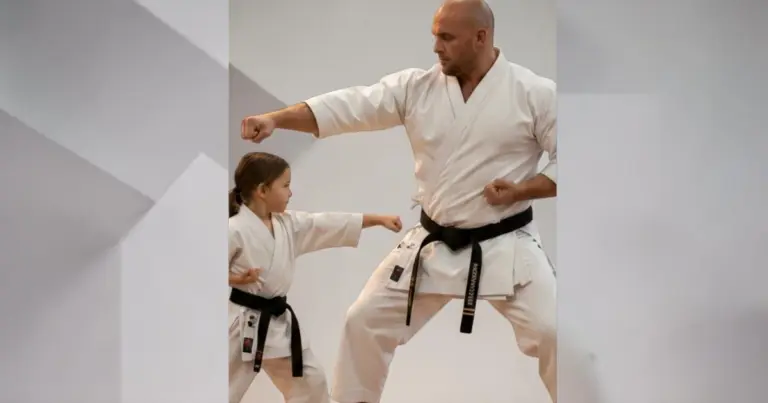
Black gi are worn in some Karate schools to distinguish instructors or senior black belts from students. In others, black is simply an accepted training colour with no additional rank significance. Some practitioners prefer black for practical reasons — it shows less wear over time and doesn’t yellow with repeated washing the way white gi can. Others prefer it for personal reasons.
Whatever your reason for considering black, the rule is the same: ask your instructor before buying. Turning up to a traditional dojo in a black gi without checking first is an easily avoided mistake. Once you’ve confirmed black is appropriate for your school, the construction of the gi is what to focus on.
The fabric: why 100% cotton matters
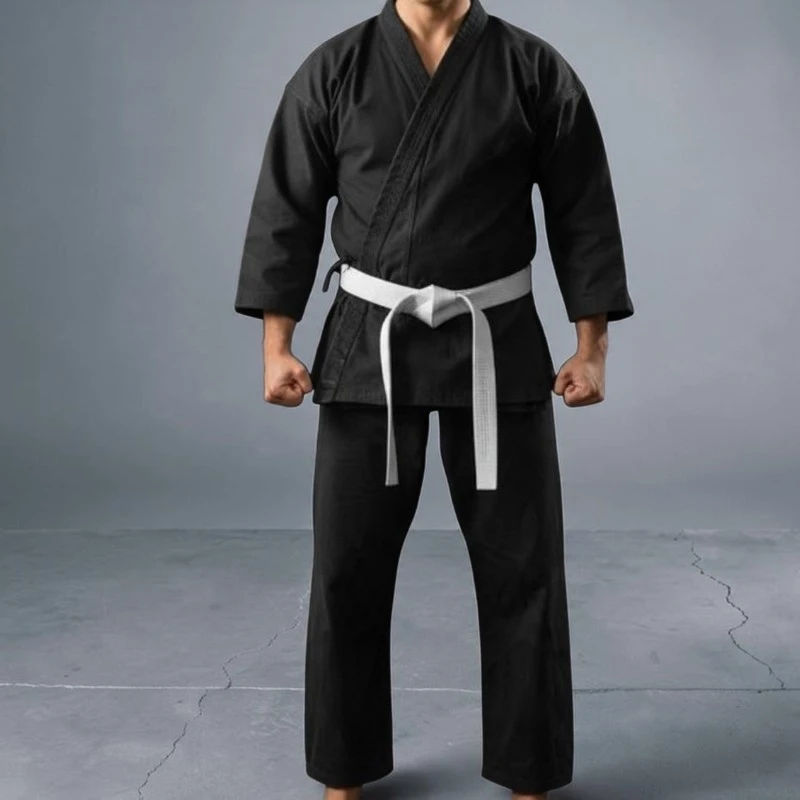
The Pacific Sports black cotton karate gi is made from 8oz 100% pure cotton. That matters more than it might seem.
Cotton is a natural fibre with an open structure that allows air to circulate rather than trapping it against the skin. During a hard training session, sweat is absorbed by the cotton fibres and evaporates rather than pooling against your body. The result is that you stay cooler, more comfortable, and less distracted by the heat and moisture that builds up in a synthetic or poly-cotton fabric.
Poly-cotton blends — the standard material for many beginner gi — are perfectly adequate for most training. But the polyester component reduces breathability. In warm conditions or long training sessions, the difference between 100% cotton and poly-cotton is noticeable. For anyone who trains in Queensland summers or in a gym without air conditioning, cotton is the more comfortable choice.
Cotton also softens with each wash, which means a gi that feels slightly stiff when new will become one of the most comfortable pieces of training clothing you own after a few sessions and washes.
One honest note: cotton gi do shrink. This black cotton karate gi is made with a shrinkage allowance built in, so buy your regular size and wash in cold water. If you’ve had cotton gi before, this won’t be news to you — if this is your first cotton gi, just remember: cold water wash, every time.
What’s included
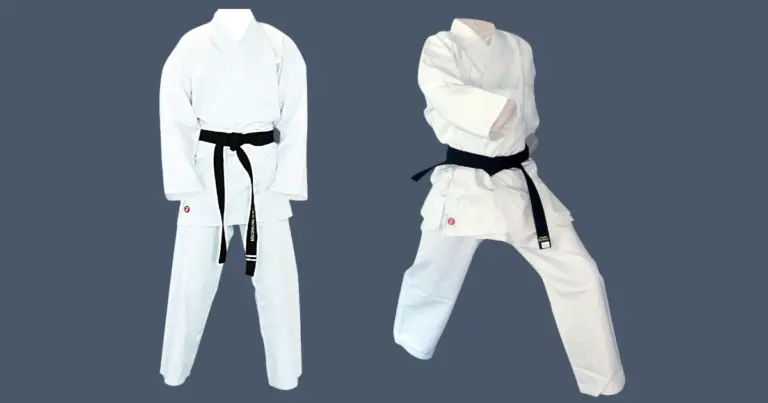
The gi consists of three pieces: jacket, pants, and white belt.
The white belt is included as standard. If you’ve already been graded and have a belt in your rank colour, you don’t need a new one — just the jacket and pants. Pacific Sports also sells gi jackets and pants separately if you only need to replace one piece.
The jacket
The jacket is cut in the traditional kimono style — the left side crosses over the right and is held in place by the belt. This is the standard Karate jacket construction, as distinct from the V-neck pullover style used in Taekwondo.
The cut is generous through the shoulders and chest. This isn’t about fashion — it’s about function. Every punching technique, every block, every turn requires your shoulders and chest to move freely. A jacket that pulls tight across the shoulders when you extend a punch is a limitation on your technique, not a minor inconvenience. The generous cut means your gi works with your movement rather than against it.
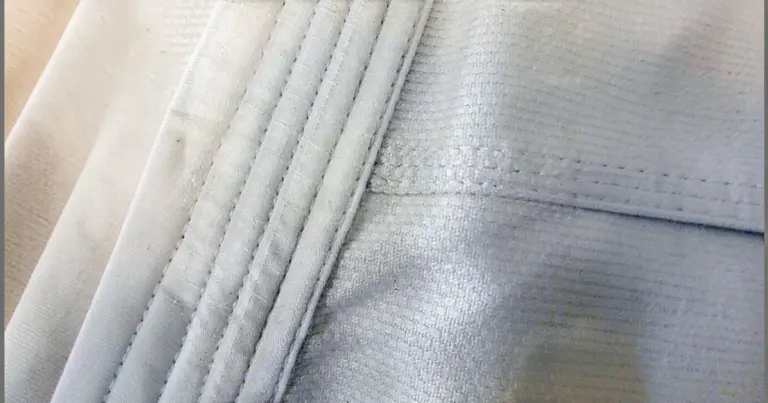
The collar and sleeve edges are stitched with heavy-duty double stitching. These are the highest-stress areas of any gi jacket — grabbed during clinch work in some styles, subjected to repeated movement and stretching in all of them. Multiple stitching lines at these areas significantly extend the life of the gi compared to lighter single-stitched construction.
The pants
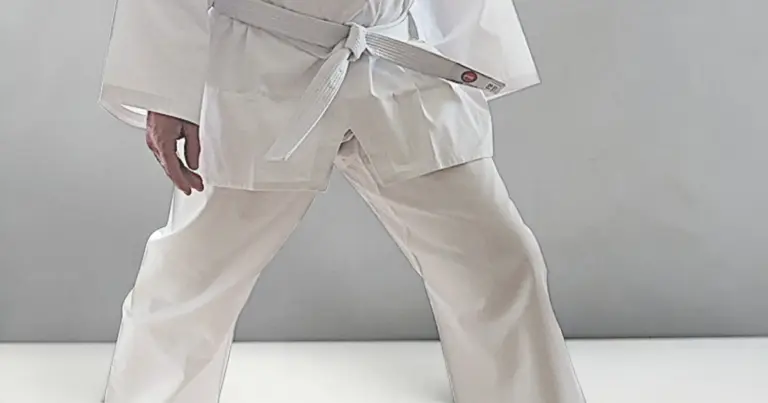
Karate pants need to do something specific: allow high kicks without the seams failing. The pants in this gi have a full gusseted crotch — an additional panel of fabric sewn into the inner seam — which distributes the stress of kicking across the panel rather than concentrating it at the seam. Without a gusset, executing a high front kick, roundhouse, or side kick puts direct tension on the inner seam and will eventually split it.
The waistband is elasticated with an inner drawstring. The elastic provides the base fit; the drawstring allows fine adjustment for different body shapes and sizes. Once you’ve found the right adjustment, the waistband stays in place through fast direction changes and spinning techniques without needing to be retied or adjusted mid-session.
Who this gi suits
Practitioners whose school permits black gi. This is the first consideration, not an afterthought. Confirm with your instructor before ordering.
Intermediate to experienced practitioners. An 8oz cotton gi is lightweight enough to be comfortable for long sessions and durable enough for regular hard training. It’s not a beginner’s gi in terms of quality — it’s a well-constructed uniform that suits practitioners at any level whose school accepts black.
Practitioners in warm climates. The 100% cotton fabric handles Australian training conditions well. If you’re training through a Queensland summer or in a poorly ventilated gym, cotton breathes significantly better than poly-cotton and will keep you more comfortable throughout the session.
Practitioners who want a training gi that lasts. Double-stitched seams and quality cotton construction mean this gi holds up to regular washing and regular hard training better than cheaper alternatives.
Caring for your black gi
The care rules for a black gi are the same as for any cotton gi — with one additional consideration.
Wash after every session in cold water with mild detergent. Sweat left in cotton fabric becomes a breeding ground for bacteria within hours of training. Washing in cold water (not hot) prevents shrinkage beyond the intended allowance and preserves both the cotton fibres and the stitching over time.
No bleach — this applies to all gi but is particularly important for black. Bleach degrades cotton fibres and will fade a black gi significantly. If you need to deal with a stain, use a mild sportswear stain remover applied directly to the area before washing.
No fabric softener. Fabric softener coats the fibres of the fabric and reduces breathability — exactly the property you’re paying for in a cotton gi. It also traps bacteria and sweat residue in the weave rather than allowing it to be washed out properly.
Wash your black gi separately from white gi, particularly for the first several washes. Black fabric can bleed during early washes and will permanently stain a white gi if washed together. Once the colour has stabilised after several washes, you can be less strict about this — but be cautious in the early days.
Air dry rather than tumble dry. Heat from tumble drying accelerates cotton shrinkage and weakens stitching at the stress points over time. Air drying in a ventilated area is better for both the fabric and the longevity of the gi. Where possible, dry in shade rather than direct sunlight for extended periods — UV exposure fades black fabric faster than washing does.
Iron for grading and competition. For regular training, don’t bother — body heat smooths out the wrinkles within the first few minutes of a session.
Sizing
Gi are sized by height, not by the combined height-and-width measurement of regular clothing.
Available sizes: 1/140, 2/150, 3/160, 4/170, 5/180.
The size number corresponds to the approximate height in centimetres the gi is designed for. If your chest or waist is broader than average for your height, buy the size that fits your widest measurement and have the sleeves or legs shortened at an alterations shop if needed. A gi that’s slightly too long is manageable; one that’s too tight across the shoulders or thighs restricts technique and will stress the seams every time you train.
If you’re between sizes or unsure, contact Pacific Sports before ordering — it’s significantly easier to get the size right first time than to manage an exchange.
For a full measuring guide, see our martial arts uniform sizing guide.
A note on washing before first wear
Wash the gi in cold water before your first training session. This removes any manufacturing residues from the fabric and allows any initial shrinkage to happen before the gi is on your body. It also gives you a chance to confirm the fit before you’re standing on the mat.
Frequently Asked Questions
Can I wear a black gi for competition?
This depends entirely on the competition. Most traditional Karate organisations — including the World Karate Federation (WKF) — require white gi for competition. If you’re training with competition goals, check the specific rules for your organisation and event. For club training, black gi are accepted at schools that permit them. Never assume black is competition-legal without checking first.
Do I need a different size to allow for shrinkage?
No. Buy your regular size. This gi is made with a shrinkage allowance built in, and washing in cold water as directed keeps further shrinkage predictable and minimal. Don’t size down in anticipation of shrinkage — the allowance is already accounted for.
Can I wear this gi for Taekwondo or Jiu-Jitsu?
Yes — the construction is suitable for Karate, Taekwondo, and Jiu-Jitsu. The traditional kimono-style jacket is the standard for all three disciplines, and the gusseted pants handle the kicking demands of Taekwondo and the grappling demands of Jiu-Jitsu. Check with your instructor about colour requirements for your specific school before ordering.
How does this compare to a poly-cotton gi?
The primary difference is breathability. 100% cotton breathes significantly better than poly-cotton, which matters in warm training conditions. Cotton also softens with washing rather than becoming clammy when wet. The trade-off is that cotton requires slightly more attention to washing — cold water, no fabric softener — and will shrink more than poly-cotton if washed incorrectly. For practitioners training regularly in warm conditions, cotton is worth the additional care.
Do I need to buy a new belt?
This gi includes a white belt. If you’ve already been graded and have a belt in your current rank colour, you don’t need a new one. Belts are sold separately in all colours if you need to replace one.
How long will this gi last?
With proper care — cold washing after every session, air drying, no bleach or fabric softener — a quality 8oz cotton gi should last several years of regular training. The collar edges and crotch seam of the pants typically show wear first. When individual pieces wear out, Pacific Sports sells gi jackets and pants separately so you don’t need to replace the entire uniform.